Dec. 30, 2025
I’d been curious about Archer Daniels Midland’s approach to employee safety since 2023, when its flagship facility experienced two explosions months apart. The idea kept percolating until late 2024, when I decided to pursue the story. Putting it all together took about half a year.
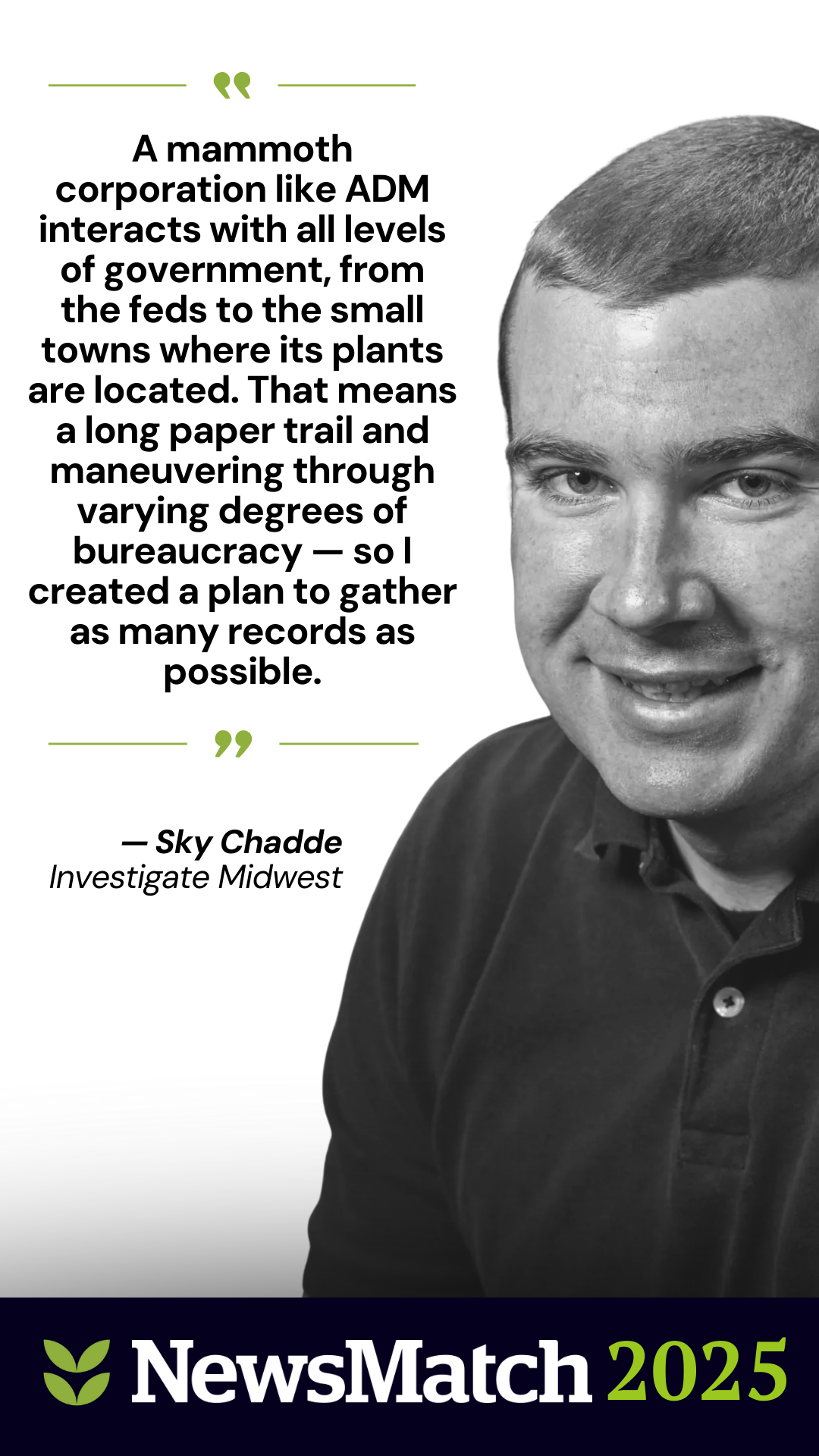
A mammoth corporation like ADM interacts with all levels of government, from the feds to the small towns where its plants are located. That means a long paper trail and maneuvering through varying degrees of bureaucracy — so I created a plan to gather as many records as possible.
I built a list of explosions at ADM facilities across the country in recent years. Then, for each incident, I requested safety inspections performed by state or federal officials, police or fire department reports and worker compensation records.
But the most revealing evidence was in an OSHA document. A fire had started at a Nebraska plant, and, when an inspector visited days later, the manager expressed concern about the maintenance performed to prevent explosions. That in itself was interesting, but the OSHA inspector went further. He asked a corporate safety executive about the maintenance issue.
“I’m going to say something that our attorney isn’t going to like,” the executive replied. The manager “has been trying to get rid of the maintenance company for quite some time.”
Here was an executive admitting to slow-rolling needed changes (ADM did not comment). A former OSHA employee later told me such comments by executives rarely make it into government reports. Typically, company representatives are much more tight-lipped.
Without donors and sustainers, I would not have found this document, and it’s likely what the executive said would not have come to light. Finding all the records and analyzing them took six months — a major time investment for any newsroom.
Whether you start a monthly donation or make a one-time gift, your generosity allows us to deliver even more reporting that keeps you informed about the power and influence that shapes U.S. agriculture and affects every layer of our food system.
Your investment in us helps make this possible.
We’ve hit our initial goal but we’re giving ourselves one more challenge: To hit our stretch goal of $30,000 by midnight Dec. 31. What do you say?

With gratitude,
Senior Investigative Reporter
P.S. There’s still time! Please help us spread the word by forwarding this email to friends and colleagues who you think would be interested in supporting our work.