For 20 years, Kara Downin has been puzzling out the perfect conservation program or partner for landowners in Knox County, Illinois, who come to her seeking help with their land.
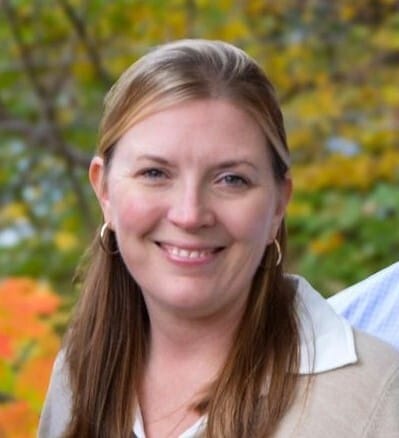
As a resource conservationist at the county Soil and Water Conservation District, Downin's goal and passion is to protect natural resources and support the agricultural community as she advises landowners about the resources and programs best suited to their needs.
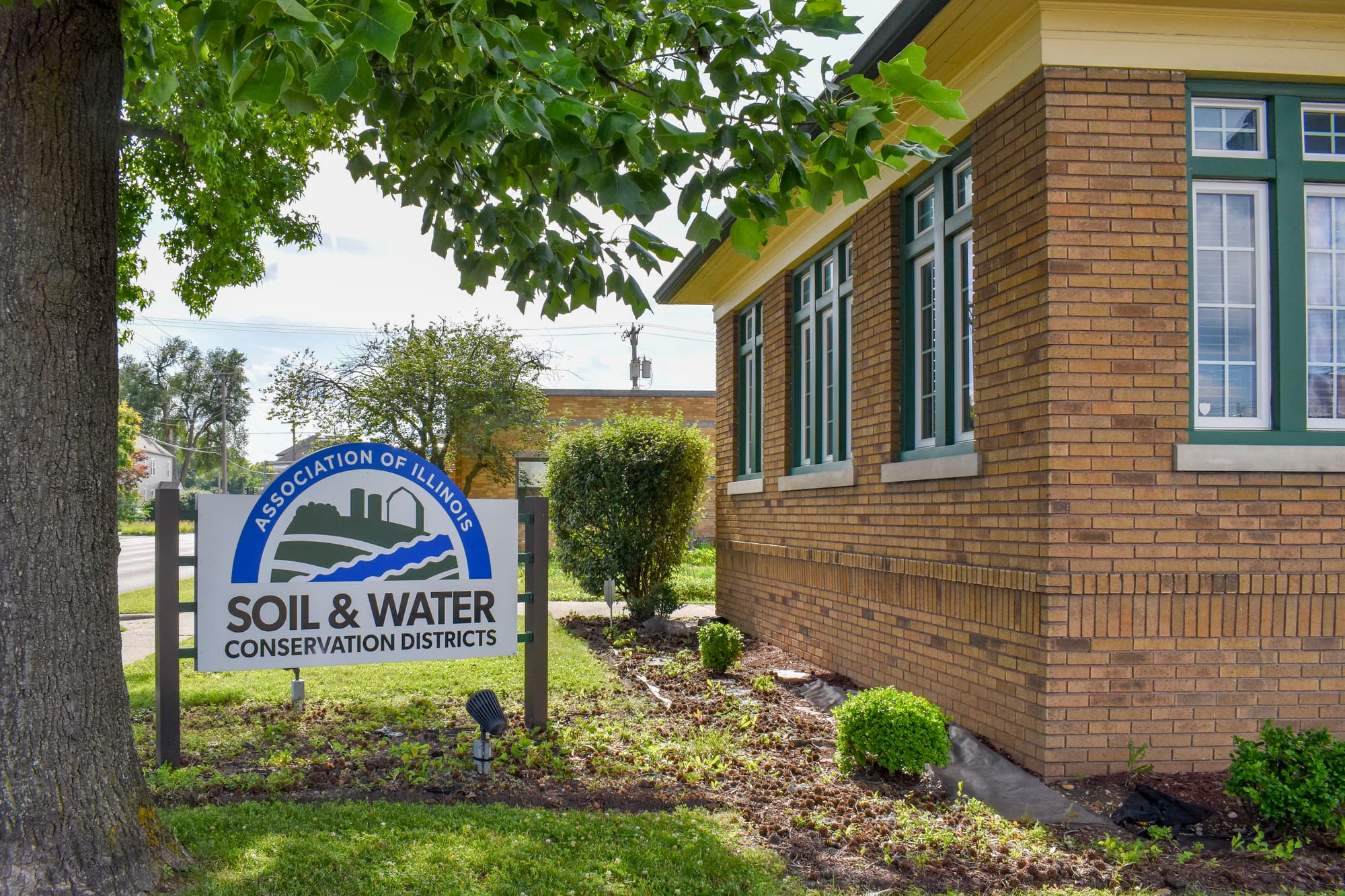
Soil and water conservation districts are quasi-governmental agencies, and all 97 in Illinois work with local landowners, assessing soil and water conditions, educating farmers about conservation practices, helping them connect to grant opportunities and providing expert advice about soil health and management.
“I like to call them the conservation delivery system,” said Josh Curry, a farmer in Northwest Illinois. “That's what soil water conservation districts are.”
These districts, and staff like Downin, also manage conservation programs for the Illinois Department of Agriculture, the Illinois Department of Natural Resources, the Illinois Environmental Protection Agency and the Illinois branch of the federal Natural Resources Conservation Service.
“Soil and water conservation districts are kind of an unsung hero of what goes on in Illinois,” said Democratic State Sen. Dave Koehler of Peoria. “Nobody really sees them, they're not front-page news, but what they do is essential to maintain the environmental health and the conditions for agriculture that this state desperately needs.”
The work is critical and rooted in preventing another Dust Bowl. And yet, the offices are underfunded, understaffed and overworked.
The funding picture
In 1934, a dust storm carried soil from the Midwest to Washington, D.C., and the Atlantic coast, caused by the prolonged drought of the Dust Bowl era. In response, Congress passed the Soil Conservation Act in 1935, at the encouragement of President Franklin D. Roosevelt.
North Carolina opened the first district in 1937 and by 1945, every state had offices.
The Illinois Department of Agriculture administers Illinois’ districts, and the state primarily funds them through a grant from the Partners for Conservation Fund — with money for cost-share projects, like the state’s cover crops incentive programs, and for office operations, which includes payroll and employee benefits.
The allocated money is then divided up among the 97 districts in the state.
The cost-share appropriation in the state budget for the 2027 fiscal year — which started July 1, 2026 and runs until June 30, 2027 — was $3 million. The money set aside for district office operations was $4.5 million.
But from fiscal years 2022-2024, funding for operations doubled to $8.5 million.
In that time, Downin’s office in Knox County received about $82,000 a year, which Downin called “phenomenal.”
“We were able to complete what we needed to complete and not be forced to look for outside sources of funding, which also comes with outside workload,” she said.
Downin is one of two staffers at the Knox County district. After 2024, budget allocation to this office fell to where it was in 2021: the district received $45,000 in operations for the 2026 fiscal year.
“We are not expensive at all to operate,” Downin said, because they work out of a federal office building and don’t have to pay rent or utilities. “But, $45,000 certainly doesn't cover two people’s salaries and benefits and stamps. It just doesn't.”
To raise extra money every year, most conservation districts sell fish for pond stocking, and native seeds, explained Eliot Clay, executive director of the Alliance of Illinois Soil and Water Conservation Districts. They aren’t big money-makers – only generating $1,000 to $5,000 – but they’ve become local traditions.
“Districts have gotten creative in their own right to create local programs for tree sales or fish sales and things like that that have allowed them to have some extra income,” he said. “But it's been a lot of people having to be scrappy to figure it out.”
While funding following the Biden years (2022-2024) shrunk, the demands on the Knox County office have not. Downin and her colleague have enough work for three people, she said.
“We both work very hard to show that our soil and water board can afford to keep both of us with some basic benefits,” she said.
To help meet demand for conservation projects and reduce its backlog, the Knox County district has an agreement with the Natural Resources Conservation Service. The agreement brings in additional funding but also adds to the staff's workload.
For that agreement, Downin works on contracts for the Conservation Reserve Program, which aren’t part of her job description.
These agreements earn around $4 million for the whole state, according to Ashley Curran, the development director at the Association for Illinois Soil and Water Conservation Districts. The amount each district gets varies by workload and the expertise of their technical staff.
“We've added that because that'll give us a big shot in the arm,” Downin said.
Why conservation matters
Extra work, limited funding and the high demand for conservation programs has created project backlogs in these districts. Backlogs mean fewer acres enrolled in conservation and farmers waiting longer to begin conservation projects.
Josh Curry, a farmer and the vice president of the Association of Illinois Soil and Water Districts, has waited about four years for funding to build a wetland on his property.
Curry wants the wetland for its ability to filter nitrates out of water and act as a natural habitat for birds and insects.
“I think landowners get frustrated because they, you know, they want to do the project, but then it takes four or five, 10 years to get funded,” he said in an interview with Investigate Midwest. “And they don't have the funds to do it privately.”
Farmers also need the expertise and support of district staff to understand when projects are expected to turn a profit. Uncertainty about performance is often a barrier to landowners adopting conservation efforts. Research shows that it takes about three years for cover crops to replenish soil enough to return a profitable crop yield.
“It’s a hard time right now to have extra costs,” Curry said. “With negative margins, it's not a real easy time to try something new and unproven on your operation.”
Government conservation programs can make those risks tolerable by sharing or covering the costs, and demand for these programs in Illinois is high, with hundreds of people applying every year.
The Department of Agriculture operates three:
- Fall Covers for Spring Savings, also known as the Cover Crop Premium Discount Program, provides crop insurance premium discounts for cover crops. Created in 2019, the program selected 542 applications from the 659 it received in 2025, according to documents Investigative Midwest obtained through records requests.
- Climate Smart Agriculture Program, which promotes no-till and strip-till practices, began in 2025. It received 1,488 applications and 1,280 were selected. The department expects to fund $22.6 million.
- Created in 2025, I-COVER, or Infield Conservation for Operationalizing Vital Economic Resilience is a cost-share program for cover crops. A total of 86 applications have been selected to receive funds from the 552 applications submitted.
In addition to state programs, there’s substantial interest in federal conservation programs such as the Environmental Quality Incentives Program (EQIP) and the Conservation Stewardship Program (CSP). In 2026, Illinoisans submitted more than 3,000 applications for EQIP and more than 1,000 for CSP, Natural Resources Conservation Service records show.
These programs – both state and federal – provide landowners the flexibility to experiment and take risks.
Curry, who has been growing cover crops like rye, wheat, barley and oats alongside his corn and soybeans for decades, said there’s a learning curve to get familiar with those practices, and it takes time for the biological action to get going in the soil.
“When you're in a farm operation, a lot of times the older members in the operation kind of have a set way, and that's the way Grandpa did it, that's the way Dad did it,” he continued. “So they want to follow that.”
The returns on that investment have been positive for Curry, who explained that cover crops and not tilling his fields has led to less time sitting in the tractor and less money spent on diesel fuel, equipment and pesticides. Instead, he has more time to devote to his family and other aspects of his business.
“Using these practices makes that soil stay in place and keeps it stronger and healthier, and it'll raise a better crop with less inputs and less money, returning more profit to us, the current steward of the land,” he said.
Conservation beyond the field
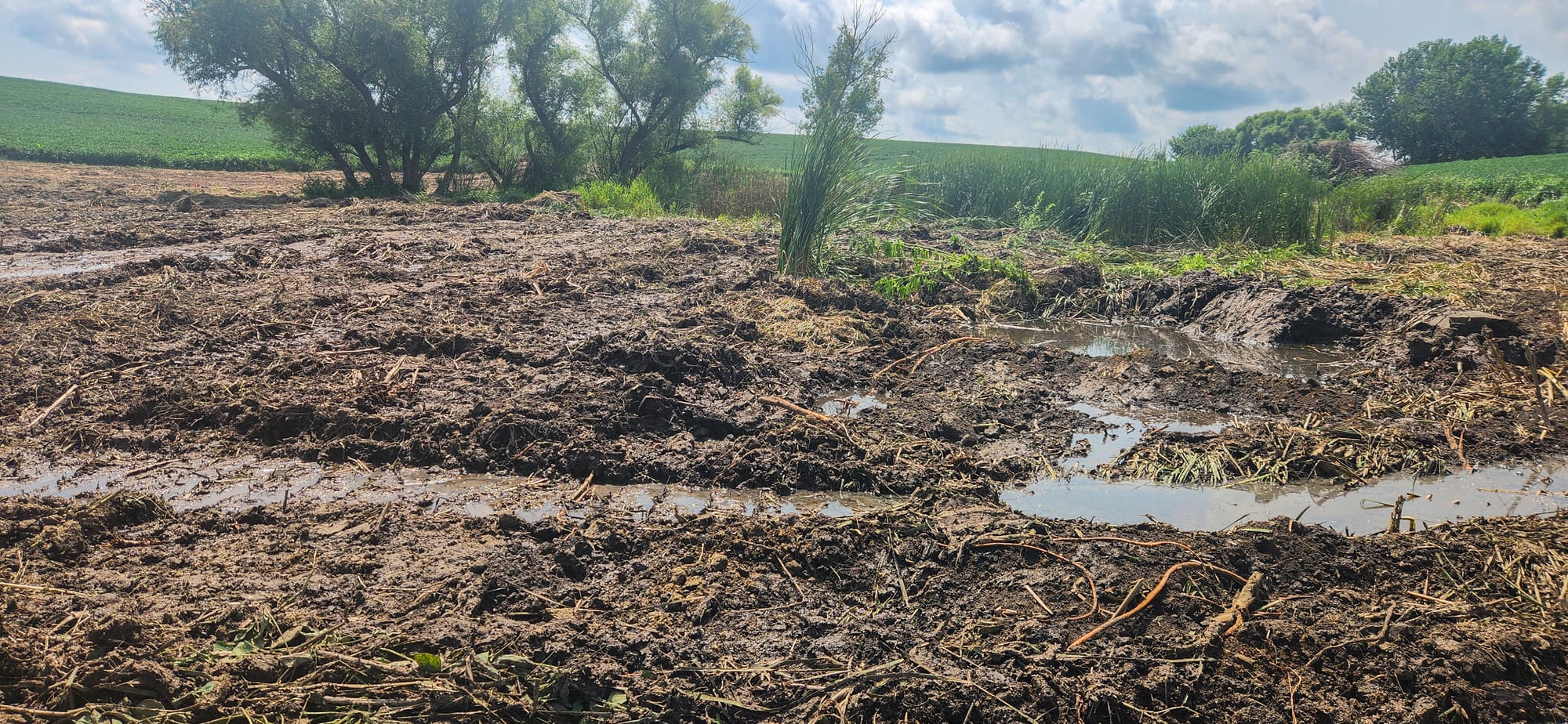
Even with nearly 90 years of conservation efforts, dust storms remain a concern and are a problem beyond the farm. A storm last year stretched well into Chicago, blanketing the city in dust. In 2023 on I-55, dust reduced visibility and caused a traffic pile-up that killed seven people.
Erosion also disrupts the land’s productivity by moving soil around within — or off — the field; which is why many conservation practices aim to rebuild soil, rather than completely prevent erosion.
“You’re building all of that soil aggregate back, all the glue that holds the soil particles back together,” Downin said. “You're building that back up by having living roots in your soil longer in the growing year.”
Interest in conservation, and the benefits, stretches beyond the fields, too. Every year, Illinois lawmakers vote on funding for grants awarded to the districts. Those grants are managed and distributed by the Department of Agriculture.
They’re also considering solutions to the imbalance between how much work soil and water conservation districts do and the resources they have.
“Soil and water in Illinois is more valuable than gold,” Sen. Dave Koehler said. “This is what drives our economy, because agriculture is Illinois' largest economic generator.”
Koehler is the assistant majority leader in the Senate, serves on the agriculture committee, and plays a role in budget negotiations. Koehler called Soil and Water Conservation Districts’ underfunding “short-sighted.”

To address the issue, Koehler has pursued legislation that would require developers to pay a per-acre fee for any land taken out of production for developing “an industrial park, a commercial area, a single-family or multi-family dwelling or being put to any other use that removes the agricultural land from production.”
The money from those fees would go into a fund for a variety of uses. Included would be a requirement that the Illinois Department of Agriculture distribute an extra $10 million during the state’s fiscal year to support soil and water conservation districts’ operations.
Senate Bill 4044, was introduced in February 2026 — and by the end of May, 15 senators from both parties cosponsored it — but wasn’t heard in committee. Koehler said he plans to introduce it again.
His colleagues don’t oppose the bill, he said, but not many legislators outside of rural areas know these districts exist or understand why they’re important.
State legislators also expect next year’s budget to be trickier because the Trump administration’s federal funding cuts have shifted more costs onto state governments. Two state budget offices in recent months projected lower revenue for Illinois in 2027.
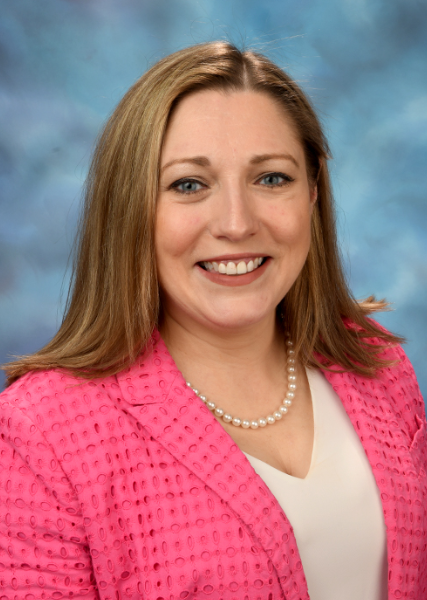
That projection is a big reason why Sen. Rachel Ventura, a Democrat from Joliet, in Chicago's far southwest suburbs, wants to rework the state’s conservation programs to emphasize technical assistance and education to increase the number of Illinois farmers doing conservation work without increasing the allocation from the state.
"We want every farmer to have this education, and that doesn't happen with one or two tech assistants for four or five different counties. Some of these offices have one person working in them," Ventura said.
She also wants to see fees for landowners who don’t adopt conservation practices or forbid tenant farmers from using them. The money could then go back to the Soil and Water Conservation Fund, she said.
“If we want regenerative farming or sustainable farming in this state, it starts with your soil health and water conservation,” she said.
Moving conservation forward
No matter how the budget changes, Downin, and people like her, will continue providing expertise and problem-solving skills to help landowners practice conservation — such as planting cover crops or perennial trees to slow water movement and help soil stay in place.
Her dedication to her work has not gone unnoticed. This spring, Downin was among nine inductees into the Illinois Conservation Foundation Hall of Fame, recognizing their contributions to conservation, education and outdoor recreation.
Downin understands the state’s budget is complicated, but she’s still discouraged by budget reductions.
“I don't know that we can be effective if you keep taking our knees out from under us, you know?” she said.
Interviews
Eliot Clay, executive director of the Alliance of Illinois Soil and Water Conservation Districts, July 28, 2026 and Aug. 4, 2026
Ashley Curran, development director at the Alliance of Illinois Soil and Water Conservation Districts, Aug. 4, 2026 and Oct. 13, 2026
Sen. Rachel Ventura, D-Joliet, July 30, 2026
Prof. Andrew Margenot, Aug. 5, 2026
Kara Downin, Knox County Soil and Water Conservation District resource conservationist, Aug. 12, 2026 and Sept. 16, 2026
Sen. Dave Koehler, D-Peoria, Aug. 13, 2026
Josh Curry, farmer and vice president of the Association of Illinois Soil and Water Districts, Aug. 19, 2026
Aug. 19, 2026
Documents/data
Illinois budget books from 2015-2027, Illinois Office of Management and Budget and Illinois General Assembly
SWCD allocation data 2026, Illinois Department of Agriculture, Aug. 25, 2026
Conservation program applications, Illinois Dept of Agriculture, received Aug. 18, 2026
Illinois Financial Assistance Programs FY 2026, Illinois NRCS, received Aug. 19, 2026
Conservation program updates, Illinois Dept of Agriculture, received Oct. 16, 2026
Questions about Soil and Water Conservation District Funding, Eliot Clay, Sept. 16, 2026
Follow-up questions, Ashley Curran, Oct. 10, 2026
News articles
“7 people killed, dozens injured as dust storm causes major car crash in Illinois: Officials” ABC News, May 2, 2023
“See the moment a dust storm blanketed Chicago; ‘It’s like something out of the history books’” CBS Chicago, May 16, 2025
“Illinois Outdoor Hall of Fame 2025 Inductees,” The Register Mail, Oct. 15, 2025
“Illinois’ budget picture tightens in final stretch amid economic uncertainty,” Capitol News Illinois, May 13, 2026
“State ends fiscal year strong — surpassing initial estimates by $1B,” Capitol News Illinois, July 2, 2026
Other
Senate Bill 4044, Land Conservation Act, 104th General Assembly