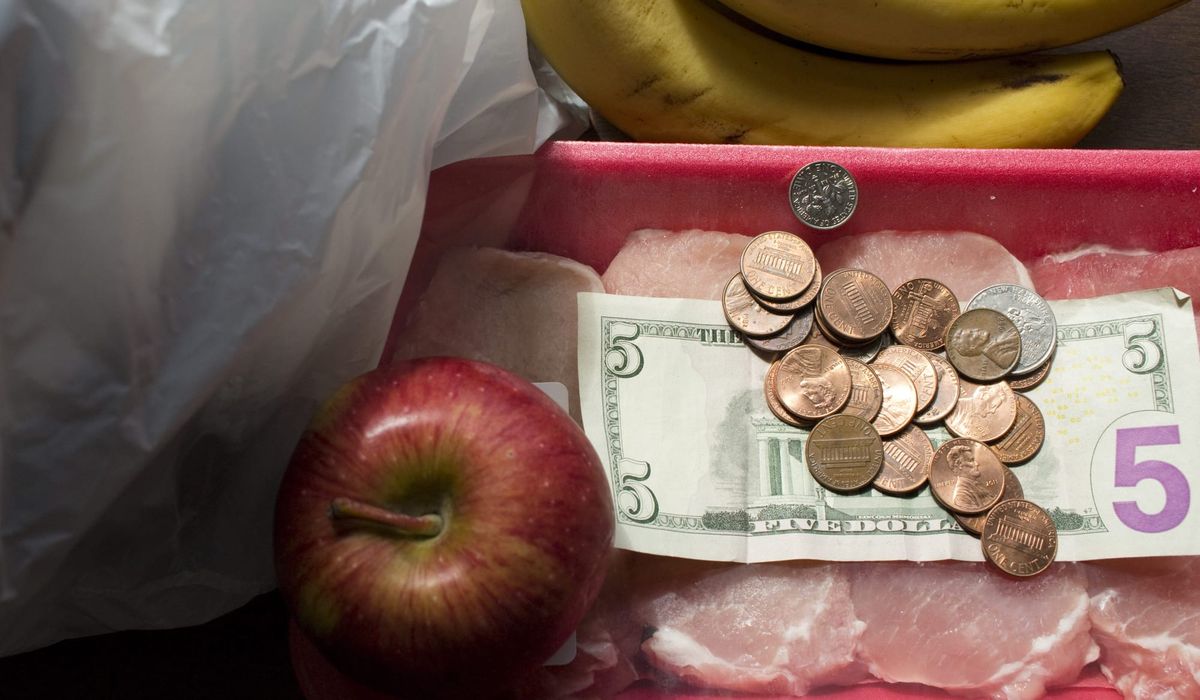
During the COVID-19 pandemic, the federal government increased its spending on federal food assistance programs, such as SNAP, WIC and school lunches.
The government was spending more on the programs than at any point in their history. Many people couldn’t work during the pandemic, and the programs helped them make ends meet.
Since then, though, the funding has trended downward, and it will likely continue to drop.
In summer 2025, President Trump’s “One Big Beautiful Bill Act” took effect, cutting taxes for wealthy Americans. To help pay for the tax cuts, the bill defunded federal food assistance, changed eligibility requirements and placed more responsibility on state governments.
The changes forced many families to figure out how to find their next meals. A single mother in Arizona told NBC News that her $600 monthly assistance for her two children stopped without warning. “We’ve been going to food banks every week,” she said. “We’re eating less, we’re eating more frozen stuff.”
A major change went into effect in October. Federal and state governments have typically split the funding for SNAP, or the Supplemental Nutrition Assistance Program. But now states must cover 75%.
Over the next five years, federal funding will decrease by almost $17 billion, according to NPR.
It’s also unclear how a planned reorganization of the U.S. Department of Agriculture might affect the programs. A judge recently halted the reorganization until mid-December.
The Food and Nutrition Administration, which until recently was named the Food and Nutrition Service, oversees the food assistance programs. Under the current relocation plan, staff in Washington D.C. would be forced to relocate to new regional hubs in Republican-led states, according to Government Executive.
A union representing federal employees has said the forced relocations could lead to large staffing losses, which could further disrupt the assistance programs.
Data Harvest (formerly Graphic of the Week) is Investigate Midwest’s way of making complex agricultural data easy to understand. Through engaging graphics, charts, and maps, we break down key trends to help readers quickly grasp the forces shaping farming, food systems, and rural communities. Want us to explore other data trends? Let us know here.
Read more on the SNAP program
 Jennifer Bamberg, Investigate Midwest
 John McCracken, Investigate Midwest
 Dave Dickey, Columnist
 Sky Chadde, Investigate Midwest