May 8, 2025 The Midwest Center For Investigative Reporting
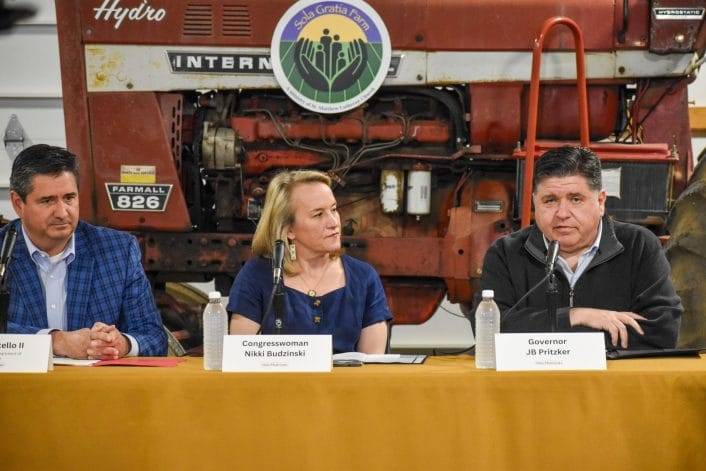
Why legislation aiming to support local farmers died in the Illinois General Assembly
Illinois state agencies spend millions of dollars each year on food for schools, prisons and other public facilities. But most of that food comes from outside the state.
This year, local food advocates tried to change that reality with the Good Food Purchasing Program (GFPP), which would have required food vendors to provide more information about how and where they source their food. The proposed program would have pushed the state to buy more food from local farmers.
But legislation failed to advance this year.
“That is what you call a missed opportunity,” said Sen. Willie Preston, D-Chicago, a bill sponsor in the Senate.
In this week’s feature story, Jennifer Bamberg looks at the proposed changes and how the state’s current food purchasing system often leaves behind local farmers and ranchers.
Jennifer’s story also shows how the food purchasing program could be even more critical after the Trump administration recently cut several programs that helped connect local farmers with government food contracts.
— Ben Felder, editor in chief

During his campaign for the presidency, Donald Trump centered on the increasing price of groceries to attack Joe Biden and Kamala Harris. If elected, Trump said he would “defeat inflation” and bring food prices down.
Trump has the same message now that he’s in office. In April, he posted on his Truth Social account, “groceries (even eggs!) are down.”
But food prices, including those of eggs, continue to rise.
View the charts here.
OPINION: Bayer's full court press to end glyphosate lawsuits heats up
By Dave Dickey, Columnist
Up to now there has been one colossal failure after another in Bayer AG's efforts to end all lawsuits claiming glyphosate — the active ingredient in the company's weedkiller Roundup — can cause cancer, primarily non-hodgkin's lymphoma.
Plaintiffs in state courts all across America cite a 2015 International Agency for Research on Cancer study that found glyphosate was “probably carcinogenic to humans.”
Bayer vehemently disagrees. And in 2019, the Environmental Protection Agency issued a ruling that said the study was “a false claim that does not meet the labeling requirements of the Federal Insecticide, Fungicide, and Rodenticide Act,” and that it “will no longer approve product labels claiming glyphosate is known to cause cancer.”
That hasn't stopped Roundup lawsuits. No siree.
Read more here.
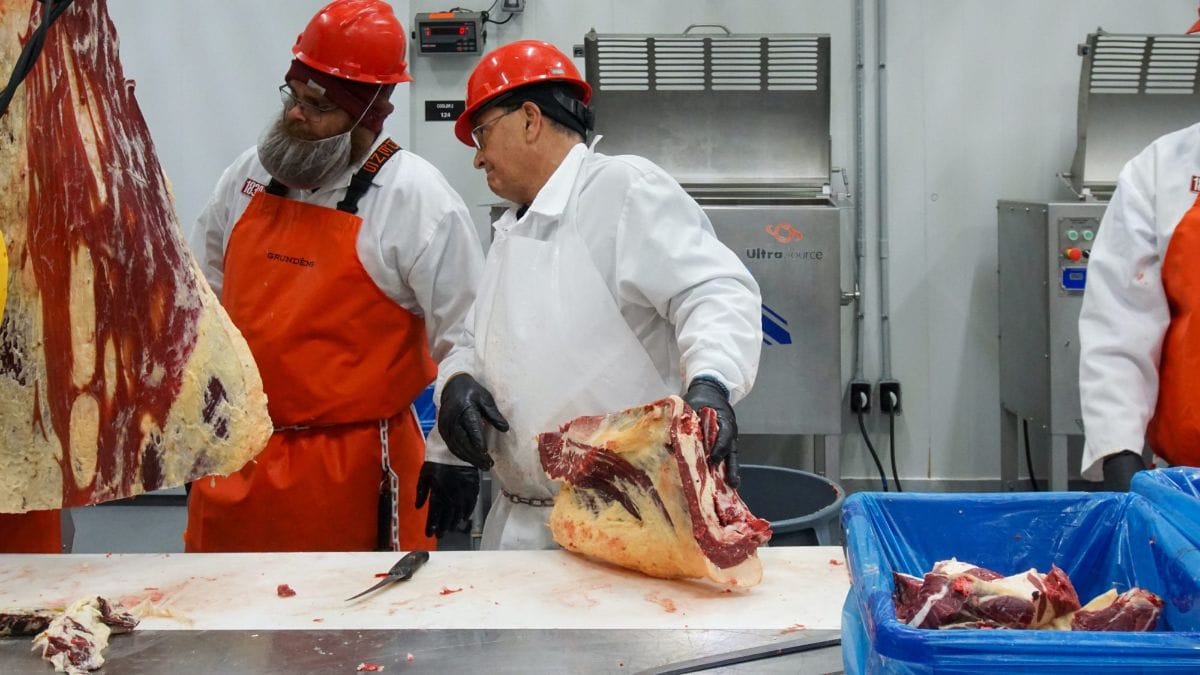
ICYMI: One path forward for local food systems
By Ben Felder, Investigate Midwest
Last spring, we reported on how tribal nations in Oklahoma began reclaiming control of the cattle industry by opening their own meat processing plants. Their approach tackled consolidation head-on and brought food production closer to home.
This week’s feature story looks at how Illinois lawmakers failed to make a similar move, letting a food reform bill die that could have supported small farms and demanded more from large food vendors.
As lawmakers weigh what's next for Illinois, the tribal-led model offers an example of what investment in local food can look like.
Read more.
Stories from our media partners
13 EPA civil rights complaints, including one targeting poultry farm pollution, in limbo, Sentient
Bayer’s effort to block Roundup lawsuits kicks into high gear, Civil Eats
Investigate Midwest is an independent, nonprofit newsroom. Our mission is to serve the public as a watchdog over influential agricultural corporations and institutions through in-depth and data-driven investigative journalism.