How Oklahoma is trying to keep food banks and local farmers connected
This week, we’re looking at what happens when federal agriculture support disappears and states are left trying to fill the gap.
After the Trump administration cut roughly $1 billion in USDA local food programs, Oklahoma’s governor signed into law a bill that preserves parts of the system that connected food banks, local producers and schools.
Reporter Juan Vassallo spoke with advocates and farmers about the fallout and the economic uncertainty stemming from Trump’s cuts. He also explored why these programs continue to draw strong bipartisan support, even in deep-red Oklahoma.
— Lauren Cross, assistant editor & audience engagement manager
DATA HARVEST: After USDA cuts, complaints over food safety spike
By Juan Vassallo, Investigate Midwest
The number of complaints filed about the safety of meat, poultry and egg products jumped nearly 40% last year, from 1,443 to 2,016, according to a new federal report.
The report comes a year after the Trump administration approved some of the most sweeping staffing cuts to the U.S. Department of Agriculture in recent memory.
Between January and June of last year, USDA reduced its workforce by 18%. The Food Safety and Inspection Service (FSIS), the agency responsible for placing inspectors in slaughterhouses and processing plants, lost about 9% of its staff.
ICYMI: Watch last week’s conversation
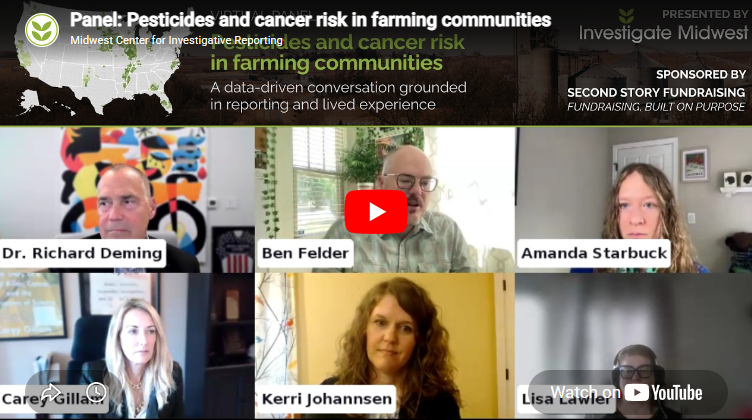
Last week, Investigate Midwest hosted a live virtual panel on pesticides, cancer and environmental risks in farm country.
The discussion built on our recent nationwide analysis showing that 60% of the 500 U.S. counties with the highest pesticide use also had cancer rates above the national average. Panelists, including oncologist Dr. Richard Deming and investigative journalist Carey Gillam, discussed how industrial agriculture, chemical dependence and policy decisions continue shaping rural health concerns across the Midwest.