Oct. 31, 2024 The Midwest Center For Investigative Reporting
How are states responding to the bird flu threat among cattle herds?
Avian influenza has been impacting poultry farms in the U.S. for the past two years, but in March, the virus began to spread to dairy cattle herds. Investigate Midwest wanted to know how states were dealing with this growing health threat, so several months ago, our reporters filed dozens of open records requests, seeking documents and emails from multiple state agencies.
What we uncovered were moments of confusion between state agriculture and health agencies — each grappling with their roles in containing the outbreak. Who should lead the response? How should cases be publicized? These were just some of the questions that state officials navigated behind the scenes.
This week’s top story takes a closer look at the confusion and conversations among state officials related to the spread of bird flu among dairy cattle.
— Ben Felder, editor in chief
State agencies initially struggled to coordinate bird flu response, records show
By John McCracken, Sky Chadde and Jennifer Bamberg, Investigate Midwest
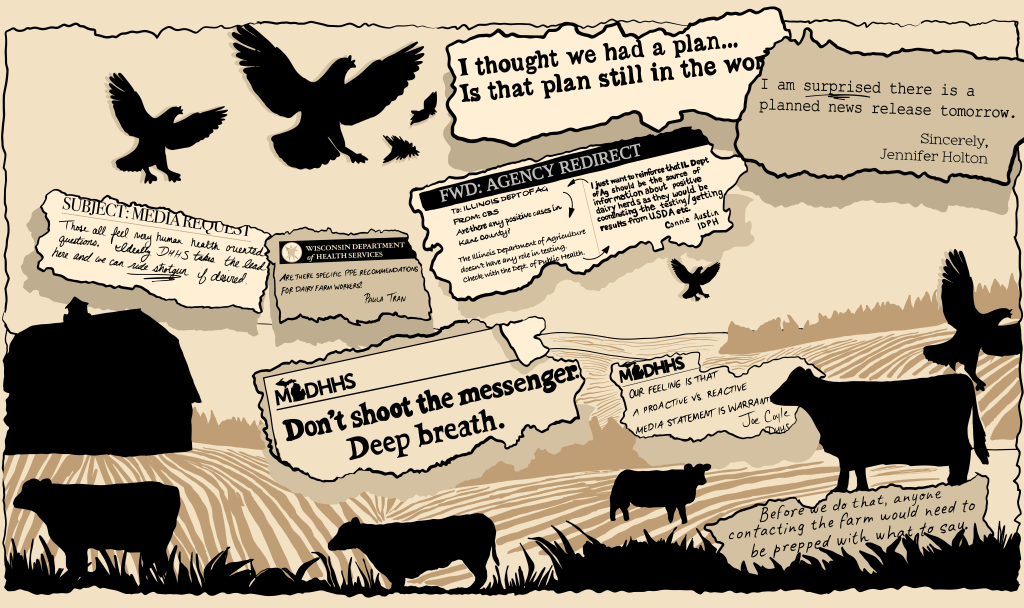
In May, a CBS News reporter asked the Illinois Department of Agriculture if there were bird flu-positive dairy herds in Kane County, only to be told the department “doesn’t have any role in this testing” and was directed to the state’s health department.
But an internal email from Connie Austin, the public health department’s veterinarian and deputy state epidemiologist, revealed disagreement.
“I just want to reinforce that IL Dept of Ag should be the source of information about positive dairy herds as they would be coordinating the testing/getting results from USDA etc.,” she wrote to high-ranking agency members in the public health department.
The reporter’s email request came nearly two months after the first reported case of bird flu in dairy cattle.
Because bird flu poses a risk to both animals and humans, state departments of agriculture and health have overlapping roles. However, records and emails obtained by Investigate Midwest show the two agencies in multiple states often disagreed on who was responsible for testing and whether confirmed cases should be publicized. Emails also showed that officials within state agriculture agencies disagreed on how to investigate suspected cases.
Read more.
GRAPHIC: Tyson Foods under investigation for employing minors amid surge in US child labor violations
By John McCracken, Investigate Midwest
Tyson Foods is being investigated by the Department of Labor for employing minors at two of its Arkansas poultry processing plants. This investigation comes at the height of child labor law violations in the past 10 years, according to DOL data.
The number of child labor law violations has increased 35% in the last decade. At that same time, the amount of monetary fines issues by the department to companies under investigation has tripled.
Search the graphic.
As ag consolidation grows, Harris and Trump pitch different approaches
By Jennifer Bamberg, Investigate Midwest
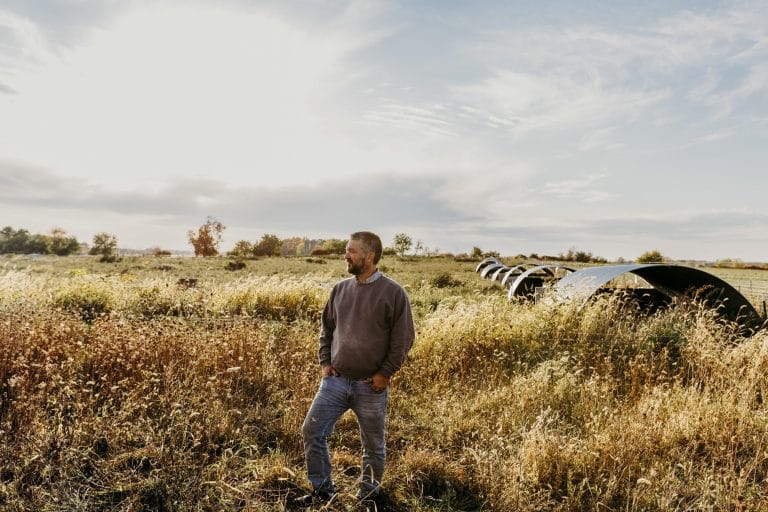
In 1994, Greg Gunthorp’s father warned him and his wife against buying the family sow herd and breeding stock. The market was basically over for the independent producers, his father told him. The price of a pig sold on the commodities market in the mid-1990s went for less than what Gunthorp’s grandfather received during the Great Depression.
But Gunthorp, who lives in Northeast Indiana in LaGrange County, made it work as an independent pig farmer, selling to restaurants throughout the Midwest and through internet sales to consumers who want to know where their meat comes from.
However, due to the continued consolidation of the meat industry, Gunthorp said big companies are now starting to encroach into this territory.
“The big guys have moved into this space with predatory pricing and deceptive marketing, and all of the same kinds of practices that we’ve seen in the commodity market have invaded the (independent) wholesale space.”
Read more.
ICYMI: Record bird flu outbreaks contribute to budget-busting egg prices
By Brittney J. Miller, The Gazette
This story, oroginally published by the The Gazette, a newspaper in Iowa, highlights the impact that disease outbreaks within the agriculture animal industry can have on the food system.
CEDAR RAPIDS — The doors of Breakfast Barn & Lunch House, a family-owned restaurant that launched in 2022 in northeast Cedar Rapids, open as early as 6:30 a.m. for early risers in search of a morning bite.
Lately, the establishment has had to make some tweaks: Staff hours have been reduced. Military discounts are now temporarily on hold. Cloth napkins will soon transition to cheaper paper napkins. Condiments usually provided free now come at a small price.
The main culprit? Skyrocketing egg prices, coupled with inflation and rising costs of produce.
Read more.
OPINION: ‘Climate-smart’ beef is an oxymoron
By Dave Dickey, Columnist
Last year, Tyson Foods unveiled Brazen Beef, a new line of meat the company claims produces 10% less greenhouse gas emissions from pasture to production when compared to traditionally produced cattle.
The Tyson brass say the Brazen brand comes from cattle produced under the company's “climate-smart beef” program. Tyson says it can monitor cattle on an animal-by-animal basis and those that meet the company's internal certification standards are slaughtered and sold as Brazen Been with, and this is hard to believe, a USDA approved “climate-friendly label.”
Climate-friendly beef? That's stunning given livestock production is the world's largest source of agricultural methane. The United Nations' Food and Agriculture Organization says cattle are responsible for 62% of all emissions from animal agriculture. And individual cows emit surprising amounts of methane – as much as 264 pounds annually, according to the U.S. Environmental Protection Agency.
Which begs the obvious question: Exactly how is Tyson Foods managing to reduce the company's greenhouse footprint through Brazen Beef production?
Read more.
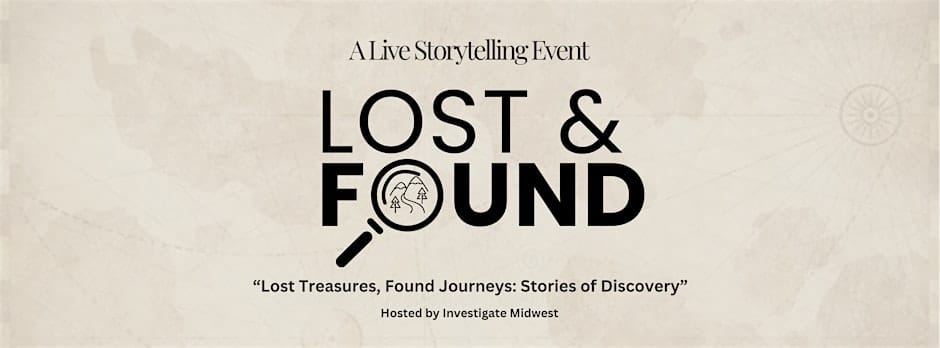
It's not too late to get your tickets to join Investigate Midwest and the IowaWatch newsroom for a live storytelling event at Poindexter Coffee, located within the Graduate Hotel in Downtown Iowa City.
This fundraising event will feature a selection of speakers and their personal stories:
- Molly Harris (all pronouns) is a poet from West Des Moines, Iowa
- Jeff Huettman (he/him) is from Princeton, Iowa
- Jordan Sellergren (she/her) serves as chair of the Iowa City Historic Preservation Commission
- Atharva Upadhye (he/him) is a human physiology major at the University of Iowa
The central theme, "Lost & Found: Lost Treasures, Found Journeys," will expand upon the topics of loss, identity, and change. The event will also feature a silent auction and trivia. Trivia is cash only, $5 a person.
Event tickets are a $25 donation, which includes a drink ticket good for a glass of wine, beer, or soda. Additionally, food and additional beverages will be available to order. The hotel is at 210 S. Dubuque St., Iowa City 52240
Doors will open at 5:30 p.m., and the event will begin at 6:30 p.m. Our emcee for the evening will be Charity Nebbe, Host of Iowa Public Radio's "Talk of Iowa." All profits from this event will go towards supporting Investigate Midwest and its independent journalistic efforts!
Investigate Midwest is an independent, nonprofit newsroom. Our mission is to serve the public as a watchdog over influential corporations and institutions through in-depth and data-driven investigative journalism.