Covering what's overlooked:
A conversation with Juan Vassallo
Q&A
"Environmental issues are often seen as the concern of liberal, urban communities — but what I’ve found through my reporting ... is that Oklahomans in rural areas care deeply about protecting the environment."
Q: What should everyday readers know about how the meat industry affects their lives, even if they don’t live near a farm or plant?
I think it’s important to remember that, for much of American history, chicken was considered a luxury — something people ate on special occasions. That began to change with the rise of factory farming, which made chicken abundant and cheap. But this shift came at a cost. The poultry industry is largely vertically integrated, meaning a handful of corporations control nearly every step of production. This consolidation has radically transformed rural America, contributing to the decline of small farms and the small businesses that once supported them. It has also led to widespread environmental damage and labor exploitation. Maybe it's time we rethink chicken not as an everyday staple, but as something to eat occasionally.
Q: What drew you to Investigate Midwest and this specific beat?
The chance to report on stories that intersect with some of the most urgent issues of our time: the environment, immigration, labor, corporate power. Also, rural communities are often overlooked in national conversations, yet they’re deeply affected by policy decisions and economic shifts. In Oklahoma especially, there aren’t many reporters covering this space, so it’s meaningful to know my work can shed light on stories that might otherwise go untold.
Q: You’re based in Oklahoma City. What does covering agriculture from that vantage point help you see or understand differently?
Oklahoma famously went all red in the last election, so when I moved here from New York, I had to push past some of my own assumptions. Environmental issues are often seen as the concern of liberal, urban communities — but what I’ve found through my reporting (and this has been a common thread in all the stories I’ve worked on so far) is that Oklahomans in rural areas care deeply about protecting the environment. Whether it’s PFAS contamination from fertilizer, overuse of the aquifer, or pollution from fires at new energy storage facilities, these issues directly affect their land, water, and livelihoods. Many of the farmers I’ve spoken with are really engaged in efforts to protect the state’s natural resources.
Q: What’s a recent story you’ve worked on that really stuck with you, and why?
I’m interested in what’s going to happen with the regulation of PFAS and biosolid fertilizer. I recently reported on a bill in Oklahoma that would have banned biosolids — which was unexpectedly killed — and I know other states may be moving in that direction. I was surprised to learn that we’ve been spreading human waste on farmland since the 1970s, yet only recently have we started to seriously reckon with the potential environmental and health risks.
Q: If you could have readers walk away from your stories with one takeaway, what would it be?
I want readers to walk away with a clearer sense of how powerful lobbying interests shape the everyday realities of rural communities. Whether it’s energy companies pushing massive storage projects or industry groups defending the use of sewage fertilizer, these decisions are often made far from the people they affect most. My goal is to show how rural residents are left to live with the consequences and how the imbalance of power helps explain why some voices are heard while others are ignored.
Q: What's a surprising or odd fact you’ve uncovered in your reporting so far?
One surprising fact I came across is how dramatically farm work has changed as a livelihood. In 1974, only about 37% of farmers had a primary job off the farm. Today, that number has jumped to around 84%. It really drives home how hard it’s become to make a living from farming alone and how much economic pressure farmers are under.
Q: Any podcasts or books you’d recommend to readers?
I’d encourage anyone to read The Meat Racket by Christopher Leonard. My editor, Ben Felder, recommended it after I joined Investigate Midwest, and it gave me a clear, eye-opening view of how the meat industry was transformed in the latter half of the 20th century — from a network of independent family farms to a system dominated by corporate factory farming. It’s essential reading for understanding the power dynamics that still shape rural America today.
Q: Now that you're settling into Oklahoma. What’s your go-to comfort food or favorite local meal?
I live close to the Asian District, which has some of the best restaurants. My favorite is Pho Cuong, particularly their Pho Ca Ri (beef curry with mushrooms).
The unseen costs: Immigration crackdown threatens America's food system
Illinois is one of the top agriculture-producing states in the nation, and Chicago is a vital artery in America's food production chain, a hub where agricultural goods are processed, packaged and distributed nationwide. This massive industry, spanning sprawling farm fields, food transportation companies and bustling processing plants, relies heavily on one crucial yet increasingly vulnerable resource: immigrant labor.
Now, as the Trump administration intensifies its immigration crackdown, pushing for new registration requirements and ramping up raids, the very people behind our food supply are living in fear. This isn't just about arrests; it's about a fundamental shift touching every aspect of their lives and, by extension, the stability of our nation's food system.
Investigate Midwest is embarking on a new project to reveal the profound, often hidden, consequences of these political shifts. Thanks to a rapid reporting grant from the Chicago Region Food System Fund, we'll take you to the ground in Chicago and rural Illinois, where families grapple with overwhelming anxiety.
For example, new stringent registration requirements are forcing immigrants into an impossible choice: risk misdemeanor charges or face potential targeting by ICE. We'll expose how these policies are driving fear, lowering school attendance and even raising concerns about human trafficking.
Furthermore, we'll peel back the layers of a complex legal battle, examining how federal immigration agencies are reportedly circumventing Illinois' TRUST Act — a law designed to protect undocumented residents. Despite the state's robust network of protections, federal lawsuits and funding, conditions threaten to erode critical social services, leaving vulnerable communities even more exposed.
Finally, we'll investigate potential changes to the H-2A guest worker program. While the Trump administration floats ideas for expansion to "take care of our farmers," simultaneous staffing cuts at the Department of Labor raise alarming questions about oversight. Less scrutiny of a program already criticized as "government-sanctioned human trafficking" could leave more workers susceptible to exploitation.
Our investigation will explore these interconnected issues, bringing you boots-on-the-ground reporting, revealing policy clashes, and uncovering the true costs of immigration enforcement on the communities that feed America.
Your support is what keeps us going. It’s what allows reporters like Juan to spend the time it takes to build trust in rural communities, pore over public records, and ask hard questions of powerful industries.
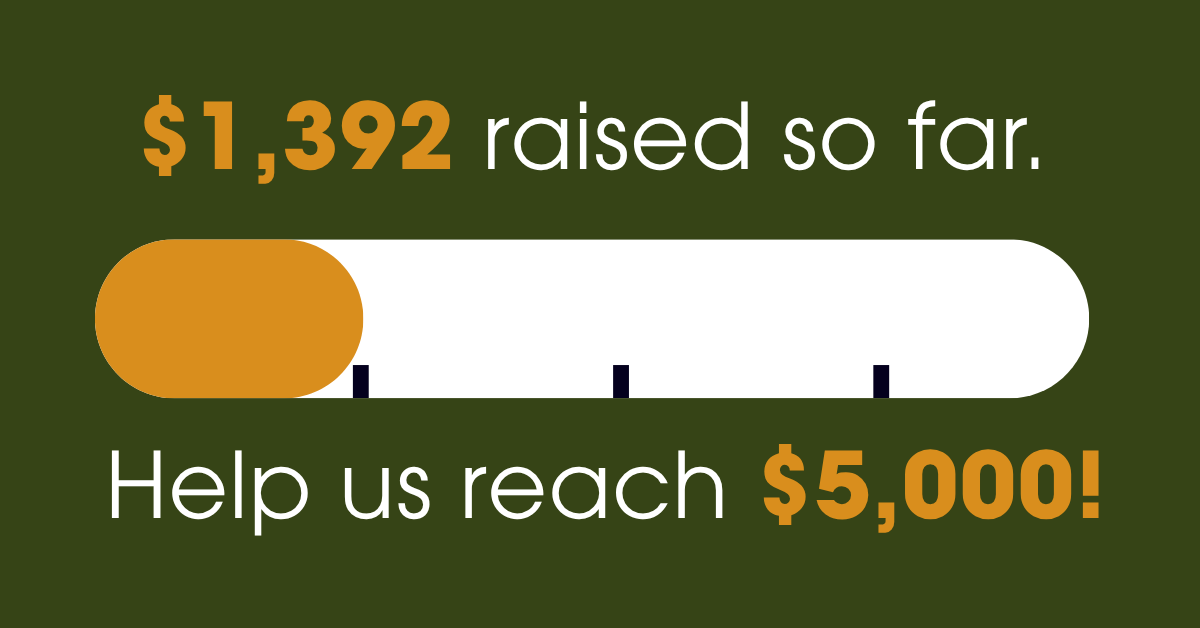
We currently have a match opportunity. Won't you help us reach our goal to raise $5,000 goal by the end of this month?
Thanks for reading,
The Investigate Midwest team
P.S. Since you believe in the work we’re doing, do us a favor and share our stories with a friend. Word of mouth helps us grow. Here are a few worth passing along:
- Deportations threaten South Omaha neighborhood built by meatpacking and immigrants
- Why Trump’s second trade war could be worse for US farmers
- Senator demands Tyson child labor probe. Trump’s cuts to DOL could make that difficult.
- Underage workers, millions of dollars and trucks full of dead chickens — inside the business of killing in response to bird flu