Dec. 12, 2024 The Midwest Center For Investigative Reporting
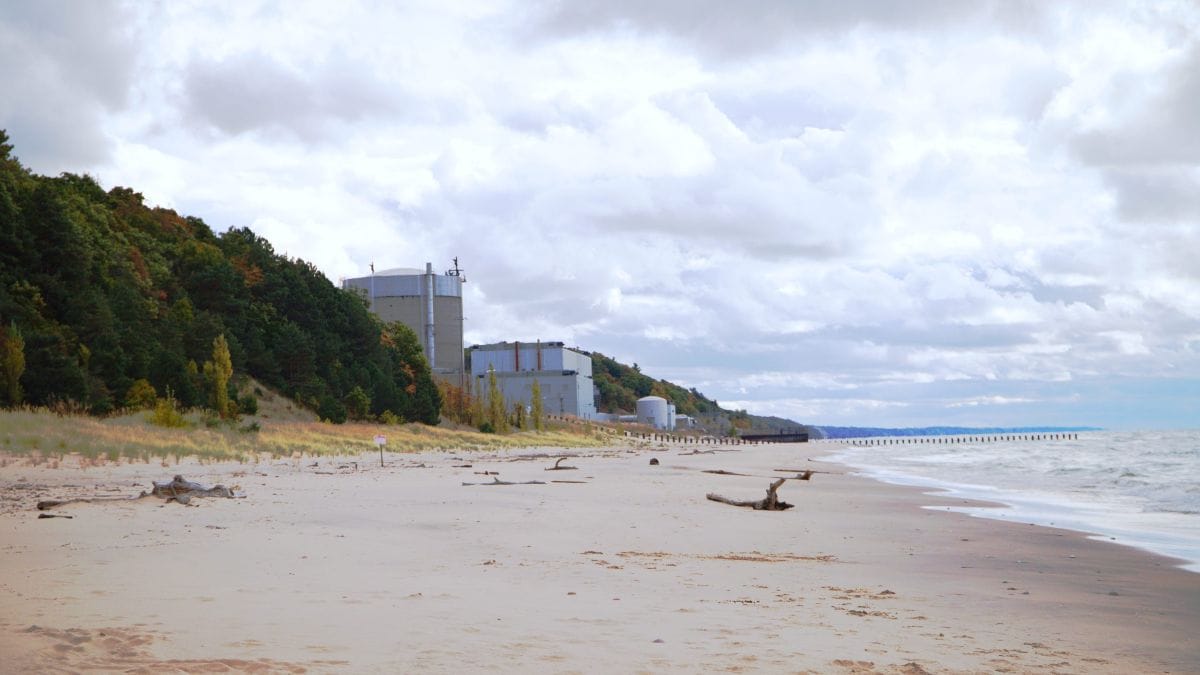
A now-closed Michigan nuclear power plant with a troubled history could reopen. What would it mean for the ‘blueberry capital’ of the world?
An effort to reopen a troubled nuclear power plant in southwest Michigan is causing concern for some of the region’s farmers.
"A leak (and) this 150-year-old farm is done," said Bill Adams, who runs Adams Blueberry Farms in Hartford, Michigan, 16 miles south of the Palisades Nuclear Generating Station. "Why would they restart something that old and sitting this long?"
Opened in 1971, Palisades regularly dealt with leaks of radioactive water and cracks in its storage tank. Federal officials labeled it one of the worst cases of nuclear fuel container weakening in the nation.
While the plant was shut down in 2022, Michigan Gov. Gretchen Whitmer has announced a plan to reopen the facility. This week’s top story takes a closer look at what reopening the plant could mean for the region’s robust agriculture sector, which has been called the "blueberry capital of the world." The story also highlights nuclear power plant disasters in other countries, showing just how devastating it can be for crops and animals.
— Ben Felder, editor in chief
Risky Revival: How the Palisades plant could impact agriculture
By S. Nicole Lane, for Investigate Midwest
COVERT, Michigan — The Palisades Nuclear Generating Station, long synonymous with safety lapses and regulatory oversight, is poised for an unprecedented comeback under Michigan Gov. Gretchen Whitmer’s plan to reopen the shuttered plant by 2025 — the first attempt of its kind in U.S. history.
However, in this robust agricultural region, there are fears about how reopening a problematic plant could impact area farmers and the food they produce.
Approximately 6,362 farms are within 50 miles of Palisades. In Van Buren County alone, where the plant is located, there are 838 farms.
Located along Lake Michigan, the plant once generated 5% of Michigan’s electricity, enough to power 800,000 homes. But a litany of mechanical issues plagued its operations for decades.
In 2013, the plant leaked 79 gallons of diluted radioactive water into Lake Michigan, forcing a five-week shutdown — its ninth closure in just two years.
Read more.
GRAPHIC: Another Trump trade war with China would hurt farmers, rural communities, study says
By Jennifer Bamberg, Investigate Midwest
Trade policies have long been a double-edged sword for American agriculture.
This week’s Graphic of the Week highlights the potential fallout of renewed trade tensions with China. A recent study by the American Soybean Association and the National Corn Growers Association reveals the damaging impact of proposed tariffs under another Trump administration.
View the graphic.
ICYMI: OK governor says China is buying up the state's farmland. Data he cites points to other countries.
By Ben Felder, Investigate Midwest
This investigation from 2023 highlights that other countries with an interest in alternative energy development as well as international corporate food producers are responsible for most of the state's farmland changing ownership.
Saddling a horse on his family’s east Oklahoma ranch, Gov. Kevin Stitt told a Fox News reporter his state’s land was under threat from the Chinese “Communist Party.” Thousands of acres were being bought by China-based companies and individuals to build marijuana farms, if not for more nefarious purposes, the Republican governor said.
“We pulled the stats, and Oklahoma was the Number 1 (in) land purchases by the communists or foreign nationals (in 2020) than any other state, it’s like 380,000 acres,” Stitt said in the interview that aired July 29, 2022. “That’s a red flag for anybody.”
Read more.
Opinion: Trump’s pick for USDA secretary untested as an ag leader
By Dave Dickey, Columnist
That president-elect Donald Trump's final cabinet nomination is for USDA secretary probably says something about his mindset concerning most things agriculture.
Back burner.
After all, Trump named two candidates to serve as attorney general before he got around to tapping Glen Rose, Texas-native Brooke Rollins to lead the massively complex United States Department of Agriculture.
Now that he’s got around to it, Trump's pick for USDA secretary is something of a head scratcher for Big Ag and agricultural organizations alike.
Read more.
News from our partners:
You get what you pay for: Customers weigh grocery sustainability, costs
By Jana Rose Schleis, KBIA
Protection of wetlands could come down to farmers, says a new report
By Izzy Ross, IPR News via Grist
Investigate Midwest is an independent, nonprofit newsroom. Our mission is to serve the public as a watchdog over influential agricultural corporations and institutions through in-depth and data-driven investigative journalism.