Connecting the dots in agriculture and trade
Dec. 2, 2025
Today is GivingTuesday, which means our newsroom is working to raise $5,000 — in one day. And, thanks to NewsMatch, Rural Partner Fund and the Joyce Foundation, all gifts up to $1,000 per donor will be matched dollar for dollar.
I want to share exactly what that support makes possible.
I love puzzles, and that instinct shapes my journalism. I connect facts, dig into documents and data, and spend long hours talking with experts and farmers to connect the dots between what’s known and what’s concealed to make sense of complicated issues.
At Investigate Midwest, I combine on-the-ground reporting in the Midwest with cross-border data analysis.
My recent work has focused on the administration’s current tariff and trade policy and its effect on agriculture, starting in Washington, D.C., and extending to ports in Brazil. To capture how these tariff policies impact the more than 500,000 soybean farmers who feel those decisions first, I’ve interviewed dozens of farmers, agricultural economists, trade specialists, brokers, logistics experts, and port administrators across the United States and South America. Reporting on soybean supply chains has led me to work in English, Spanish, and Portuguese, drawing on more than two decades of experience covering international agreements and business.
Through that reporting, I’ve examined why the U.S. share of the global soybean market has shifted, the financial pressures farmers face, how China’s investments in South American port infrastructure affect U.S. producers, and even how trade policy shows up locally in places like Des Moines' Downtown Farmers’ Market.
That same determination to look beyond the obvious drives my data reporting. I analyzed thousands of trade records for the tariff stories to track how U.S. soybean and agricultural exports shifted after the first trade war with China, where shipments dropped, which ports gained, and how countries like Brazil and Argentina filled the gap. Working through that complexity showed how policy decisions have rippled across supply chains and communities.
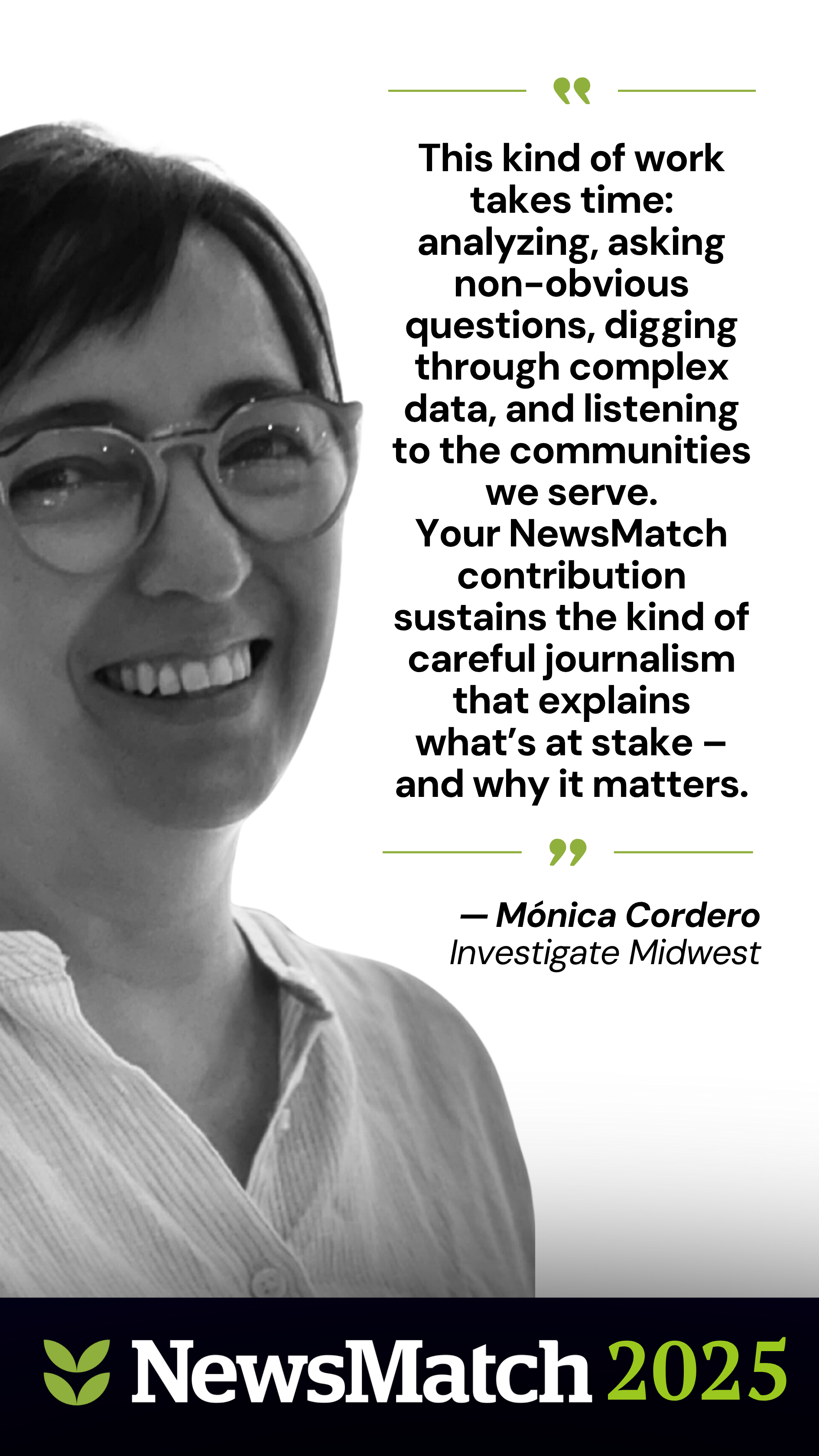
This kind of work takes time: analyzing, asking non-obvious questions, digging through complex data, and listening to the communities we serve. Donor support makes it possible. Your NewsMatch contribution sustains the kind of careful journalism that explains what’s at stake – and why it matters.
Thank you,
Mónica Cordero,
P.S. NewsMatch only runs through Dec. 31! Give now to ensure your gift is matched and your impact is tripled.
Investigate Midwest relies on donations, and fundraisers like this one, to exist. We appreciate your patience with extra emails during these times. Thanks for being a part of the Investigate Midwest community.