Feb. 2, 2023 www.investigatemidwest.org Midwest Center for Investigative Reporting
PA case largely a win for workers' rights
On Tuesday, a workers’ rights case that began in the early days of the COVID-19 pandemic was brought to a conclusion. And, with a notable caveat, workers largely scored a victory, experts said.
The case began in Pennsylvania at a food processing plant. Fearing for their lives, workers sued OSHA in an effort to compel the agency to act to stop the spread of the virus.
During the case, OSHA attorneys made arguments that drew condemnation from former agency officials. If those arguments had won out, an important tool for workers would have been gutted. The Tuesday decision keeps much of it intact.
— Sky Chadde, assistant editor and senior reporter

In first test before appeals court, important worker safety law is affirmed, with notable caveat | Sky Chadde, Investigate Midwest
The workers’ attorneys — from the organizations Justice at Work Pennsylvania, Public Justice and Towards Justice — said it was the first time the “imminent danger” standard had been tested before an appeals court.
“At issue here are the legal tools that workers have to protect themselves,” the attorneys said in a statement. “This decision gives workers a limited tool to protect their safety when OSHA is failing to do so, but it is a tool nonetheless.”
In its ruling, the Third Circuit Court of Appeals concluded the right to sue is a “narrow one” intended for workplace dangers that can’t wait for OSHA to finish enforcement actions.
Read more.
Graphic of the Week: Iowa leads in number of birds affected by avian flu | Suzanne Behnke, Investigate Midwest
In the U.S., 58.2 million birds in 47 states have been affected by the ongoing avian flu outbreak, according to the latest data released by USDA. The data collected by the Animal and Plant Health Inspection Service (APHIS) as of Jan. 27, 2023, shows 312 commercial flocks have been affected.

Column: Are you in the mood for some lab-grown chicken? | Dave Dickey
Dave Dickey writes in his latest column: "Lab-grown cultivated chicken is coming. In the next year or two it will become available in limited quantities right here in the good ol’ USA. Cultivated meat is real meat without the slaughtering. It’s honest-to-goodness animal flesh."
Read more.
Other news
The following stories are a product of the Mississippi River Basin Ag & Water Desk, an editorially independent reporting network based at the University of Missouri School of Journalism in partnership with Report For America and funded by the Walton Family Foundation. Investigate Midwest is part of this network.

High input costs might turn more farmers to regenerative practices | DTN/Progressive Farmer
Cover crops. No till practices. Farmers are looking at different alternatives to keep costs down. Ohio farmer Dave Brandt noted a lot of farmers who pre-bought fertilizer and chemicals before last year are now facing input costs 25% to 30% higher than last year. “I think there are a lot more guys looking to try to find the answer,” he said at the No Till on the Plains conference in late January.
This story is by Chris Clayton.
Read more.
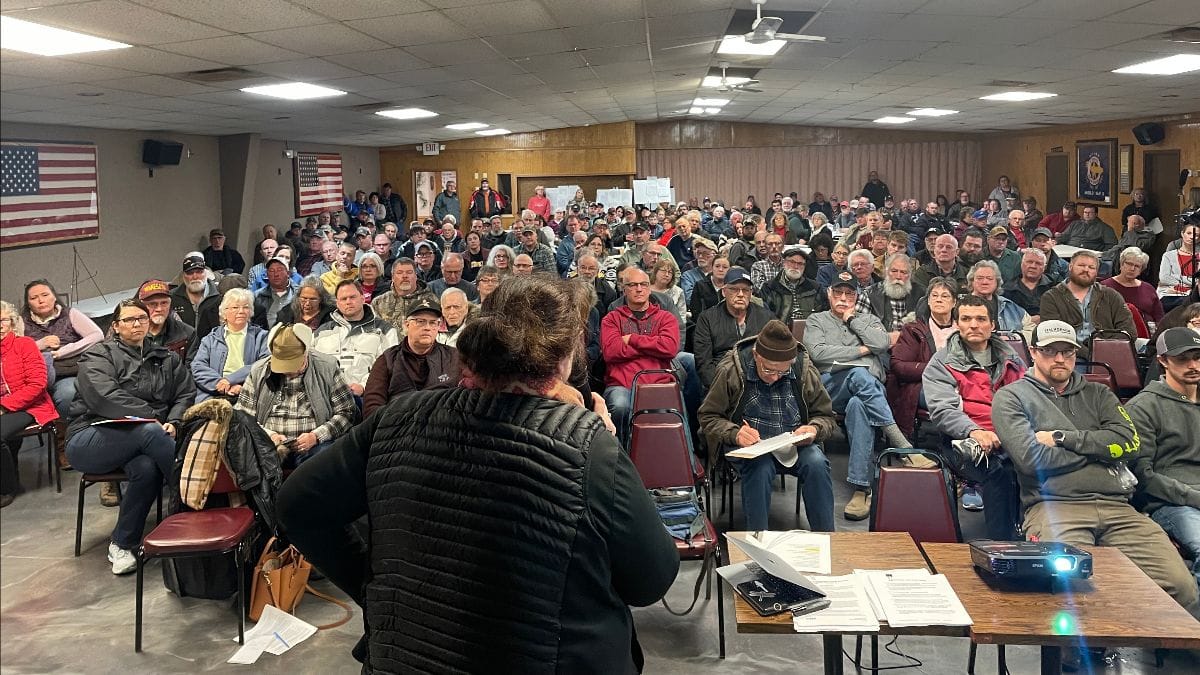
‘Carbon Express’ pipeline runs into skepticism in Minnesota farm country | Minneapolis Star Tribune
Summit Carbon Solutions, which is developing the $5.2 billion “Midwest Carbon Express,” has been promising to pay farmers and other landowners for easements, in some cases dangling five-figure signing bonuses.
A company executive said Summit has secured about half the easements it needs in Minnesota. Even so, pushback was evident in this small southwest Minnesota farm town during a Monday evening in January where about 120 people, mostly landowners, packed the American Legion hall for a two-hour community meeting on carbon pipelines.
This story is by Jennifer Bjorhus.
Read more.