June 20, 2024 The Midwest Center For Investigative Reporting
State effort comes after 2023 SCOTUS decision
stripped away federal protections
During the 103rd legislative session for the State of Illinois, the democratic super majority in the General Assembly passed several conservation-minded laws tied to agriculture.
But it failed to address one in particular: the Wetlands Protection Bill. Lawmakers also slashed the budget of an organization tasked with helping implement conservation goals in agriculture.
The wetlands bill seeks to reestablish protections stripped away last year in a U.S. Supreme Court decision. Advocates in Illinois said that if passed, the bill would have helped reduce the risk of flooding in vulnerable communities, including farmland, and protect water quality.
— Jennifer Bamberg, Illinois Statehouse reporter
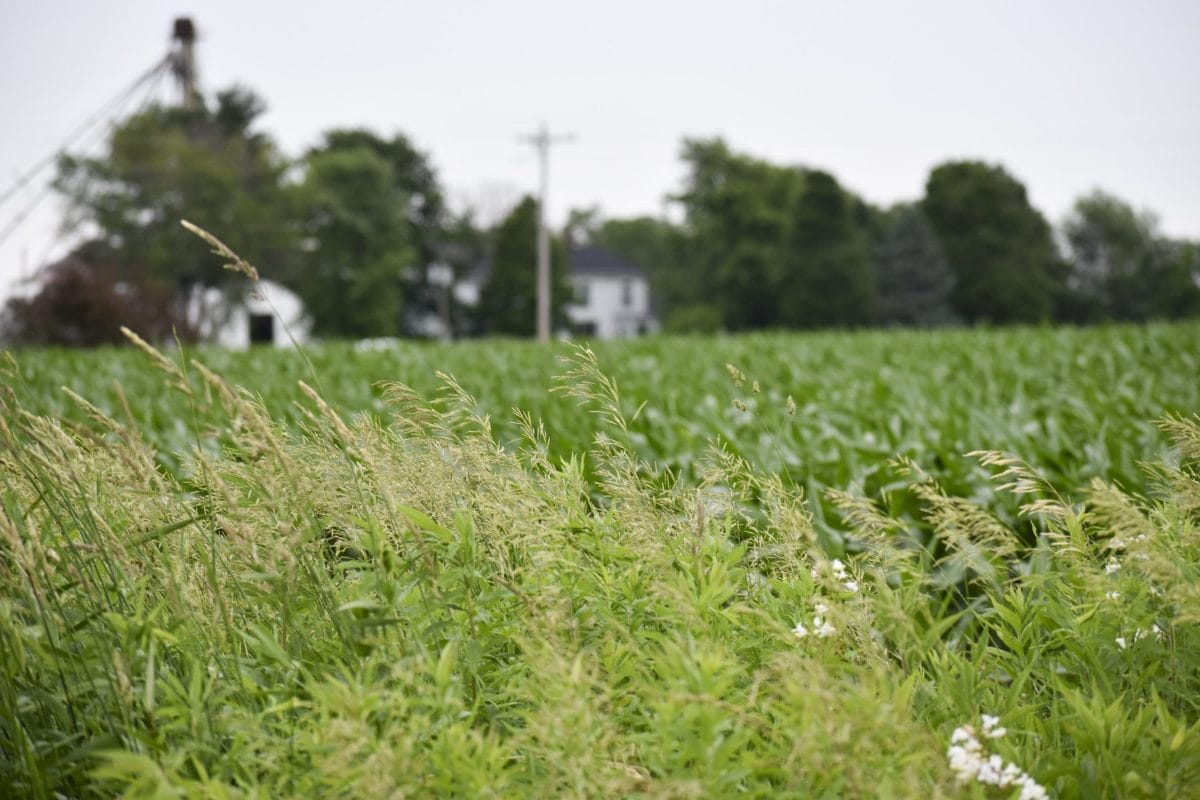
As Illinois legislative session ends, lawmakers’
attempt to reinstate wetland protections fails
By Jennifer Bamberg, Investigate Midwest
Nearly 20 years ago, Jessica Whinston inherited 20 acres of land that her grandparents once farmed in Quincy, Illinois. She and her husband, Bradley, worked to return it to a productive farm, eventually producing 100,000 pounds of vegetables a season.
In July 2015, a powerful storm tore through Quincy, downing massive trees and knocking out power for several counties. Seven and a half inches of rain fell in less than an hour, causing the creek behind the farm to overflow. Six feet of black water, inundated with chemical fertilizers and pesticides and runoff from animal operations nearby, flooded her fields.
“We lost everything,” Whinston said.
Severe weather caused by climate change, such as more frequent flooding, was one issue Illinois lawmakers tried to address during this year’s legislative session. Among the bills that failed to pass was the Wetlands Protection Act, which sought to restore protections for wetlands that were stripped last year in a United States Supreme Court decision.
Read more.
Tyson Foods, Cal-Maine Foods sued for alleged antitrust action
By John McCracken, Investigate Midwest
Farmers who raised chickens for Tyson Foods have filed a class action lawsuit against the meat company, alleging that the company broke its promise not to engage in antitrust behavior.
The complaint filed in the Circuit Court of Stoddard County, Missouri, alleges that Tyson Foods promised local and state officials that it would sell its Dexter, Missouri, meatpacking complex to a competitor after the company closed two plants in the state in 2023.
“Our lawsuit alleges that due to the anti-competitive behavior of the defendants, those families will never again be able to perform the one job they spent millions of dollars to do,” said Rusell Oliver, the Missouri attorney representing the poultry growers. “This fact renders the value of those farms (that were once worth millions) to nearly nothing.”
Read more.
Oklahoma governor vetoes effort to enforce the state’s groundwater limits
By Ben Felder, Investigate Midwest
Oklahoma Gov. Kevin Stitt vetoed a bill requiring groundwater users to prove they are staying under state-imposed limits, keeping the state as one of the few above the declining Ogallala Aquifer not to require agriculture well owners to track water usage.
Oklahoma’s Republican-majority Legislature approved similar requirements with House Bill 3194, requiring all water well permit holders — except residential users — to use “water well flow meters or an alternative measuring system.”
But Gov. Stitt vetoed the measure, calling it an infringement of property rights.
Groundwater users in northwest Oklahoma are limited to 2 feet of water per acre yearly, around 650,000 gallons.
Read more.
And ICYMI: The top 5 things to know about groundwater depletion in Oklahoma’s panhandle
GRAPHIC: Most corn planted in the US is engineered to kill insects and resist herbicides
By Evelyn Lewis, Dow Jones News Fund Data intern
Genetically engineered seeds most commonly fall into two broad categories: herbicide-tolerant and insect-resistant. Herbicide-tolerant varieties are engineered to resist specific herbicides, such as glyphosate and dicamba, while insect-resistant varieties contain a gene from the soil bacterium Bacillus thuringiensis, which produces a protein that kills insects.
Stacked gene plant varieties contain both of these traits, and now represent more than 80% of all corn grown in the United States.
View the graphic.
News from our partners
Illinois Legislature puts the brakes on a carbon capture boom. By Juanpablo Ramirez-Franco, WBEZ
‘None of us saw this coming’: Michigan confronts bird flu in cows. By Izzy Ross, IPR News
‘Dead zone’ in the Gulf of Mexico predicted to be bigger than average this summer. By Eva Tesfaye, WWNO-New Orleans Public Radio
Investigate Midwest is an independent, nonprofit newsroom. Our mission is to serve the public as a watchdog over influential corporations and institutions through in-depth and data-driven investigative journalism.