Oct. 10, 2024 The Midwest Center For Investigative Reporting
Got TextRURAL? Sign up for our new texting service and get Investigate Midwest news (and more) on the go.
Greetings, everyone!
I’m Lauren Cross, your audience engagement manager, and I’m excited to introduce a new way to stay connected with us — TextRURAL. If you’re always on the move like I am, this is the perfect way to get our top stories sent straight to your phone every week, no matter where you are.
With TextRURAL, you’ll receive:
- A weekly roundup of two to three essential stories from Investigate Midwest, focused on the issues impacting rural communities and beyond.
- Bonus stories from other nonprofit newsrooms, so you’re always in the know.
- News that fits your schedule — just check your text messages.
How to get started:
Text the keyword MIDWEST to 1-833-600-2220, visit our website to sign up, or scan the QR code below with your cell phone. You’ll be all set to get our newsletter stories on the go.
Looking forward to keeping you informed,
— Lauren Cross, assistant editor/audience engagement manager
Ag Secretary Vilsack deflects on future career plans, regulatory ‘revolving door’
By John McCracken, Investigate Midwest
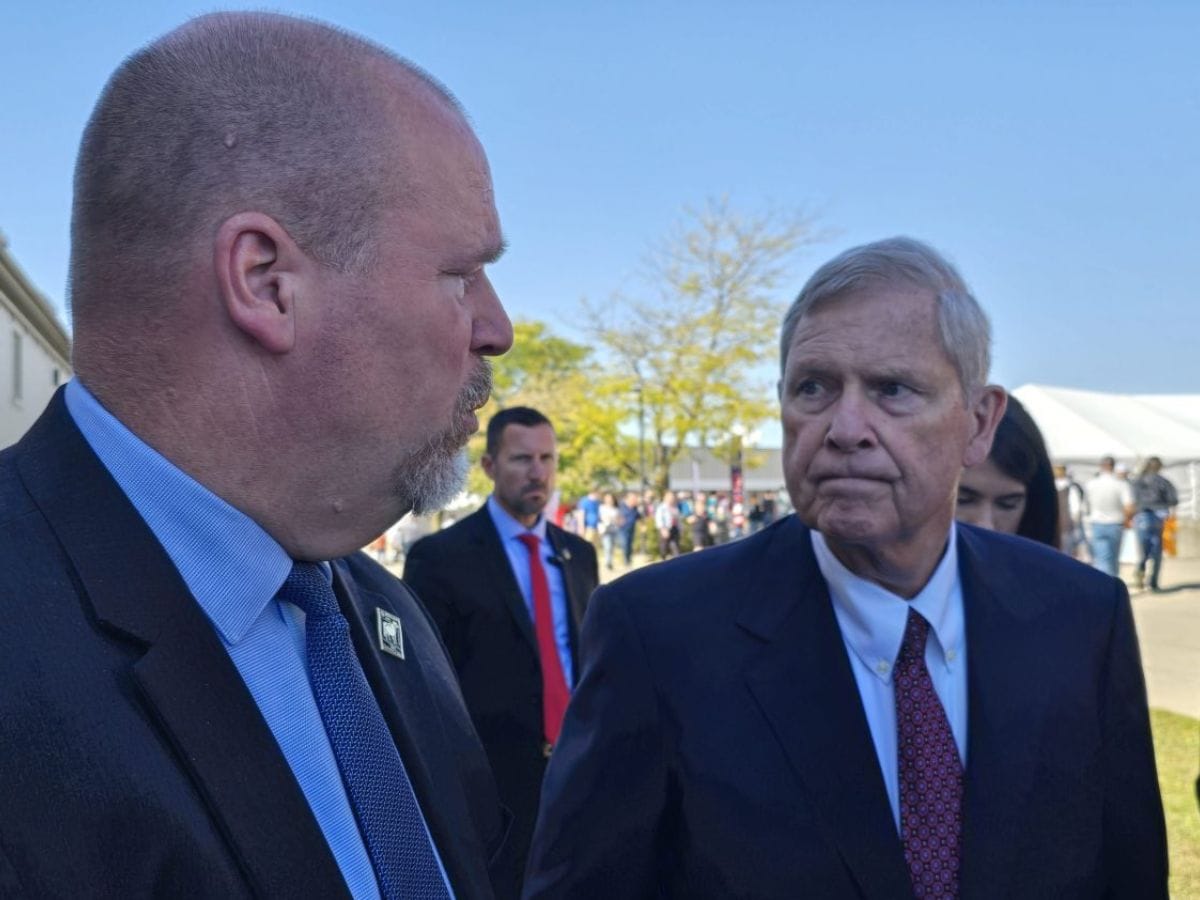
MADISON, WISCONSIN — Agriculture Secretary Tom Vilsack, who moved into a dairy lobbying position following his first go around as head of the USDA, did not reject making a similar move once his current time as secretary ends.
Speaking to reporters last week at the World Dairy Expo in Madison, Vilsack was asked by Investigate Midwest if he would again join the rotation of federal regulators working in the agriculture industry.
“My plans are to be here today to talk about the dairy industry, because I care about the industry,” he said.
When pressed again, Vilsack said he couldn’t make promises because he can’t predict the future. “Nobody can promise where they’re going to be tomorrow. I could be dead tomorrow,” Vilsack snapped, closing the press conference. “Good grief, man, what a question.”
Vilsack, 73, has previously come under scrutiny for his close ties to agribusiness companies and organizations. He’s also been criticized for taking part in what’s known as regulatory capture, a process where government officials, responsible for regulating an industry, later work for that same industry.
Read more. And you can listen here to Vilsack's full answer.
In new blow to corn contractors, Bayer requires they provide their own safety equipment
By Sky Chadde, Investigate Midwest
For years, Bayer has provided local contractors in Nebraska with the safety equipment they need to work in the company’s corn fields.
But, this year, the multinational company has shifted that cost, which can be in the thousands of dollars, to contractors. Bayer confirmed the change, which was previously unreported, to Investigate Midwest.
Here are key takeaways:
- Labor questions: The situation in Nebraska raises questions about the H-2A program. Employers wanting to use foreign visa labor must prove no U.S. residents want available agriculture jobs. The federal government keeps approving H-2A workers, but Nebraska companies say there is plenty of available labor in-state.
- Less local money: When Bayer uses contractors that employ foreign labor, its money goes to workers who spend their wages in their home countries, not the U.S. If the money went to Nebraska-based workers, that money would likely be spent locally, which could contribute to the local economy.
- Shifted costs: Bayer has shifted costs, including workers compensation insurance, to local detasseling contractors in recent years. This past summer, for the first time, it required contractors to pay for their own safety equipment, which can cost thousands of dollars.
Read more.
GRAPHIC: Kansas farmers lead Midwest in computer, smartphone use
By Mónica Cordero, Investigate Midwest/Report for America
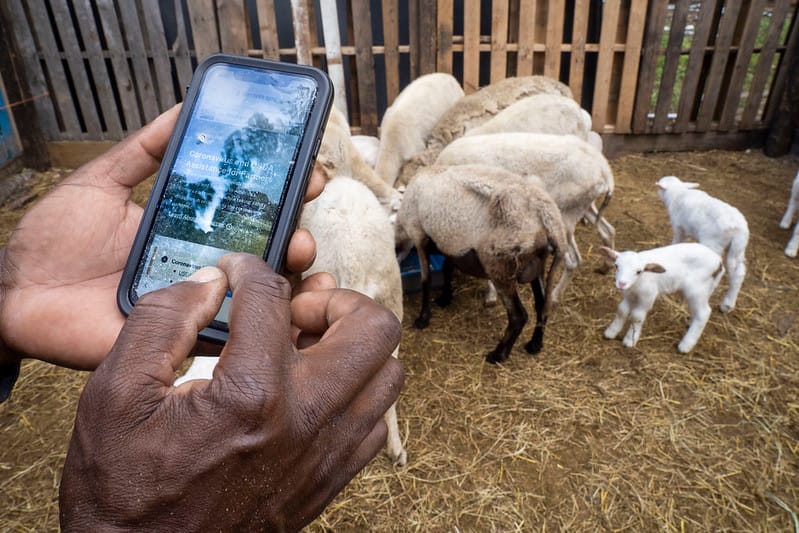
Kansas leads the Midwest in farmers’ use of computers and smartphones, according to the latest technology use and ownership report from the U.S. Department of Agriculture.
In Kansas, 85% of farmers own or use a laptop or desktop computer, and 92% have a cellphone. Ohio has the lowest computer use or ownership among farmers in the Midwest, with 60%, while Indiana farmers have the lowest smartphone access in the region at 59%.
View the graphic.
ICYMI: In Washington, agricultural policymakers circulate among Farm Bureau, USDA and industry
By Madison McVan, Investigate Midwest
In light of Agriculture Secretary Tom Vilsack's comments about whether he would again take part in the regulatory "revolving door," this story from 2022 remains relevant. In case you missed it, the investigation sheds light on the movement of agriculture policy leaders between government, industry and the American Farm Bureau Federation.
In the weeks prior to leaving his role as U.S. Department of Agriculture chief of staff in January 2021, Joby Young received emails from lobbyists with links to private-industry jobs with titles like “director of government relations,” “project manager, environmental stewardship” and “director of crop insurance.”
Private-sector job openings were circulating among some of the agriculture industry’s most powerful players in Washington, D.C. — the American Farm Bureau Federation, agribusiness lobbyists and USDA’s Young — as the federal government prepared to transition from the Trump-appointed staff to the Biden administration.
Frequently copied on Young’s emails was Dale Moore, executive vice president of AFBF, the agriculture industry’s largest lobbying group.
In July 2022, Moore retired and Young took over as AFBF executive vice president following a stint at a consulting firm.
Read more.
OPINION: Is there any middle ground to be found to reduce deadly CAFO barn fires?
By Dave Dickey, Columnist
Big Meat is absolutely apoplectic over new standards approved by a non-governmental organization you most probably have never heard of that could cost some concentrated animal feeding operations millions of dollars.
At its annual meeting this summer, the National Fire Protection Association adopted revisions to NFPA 150, its fire and life safety in animal housing facilities code, over the heated objections of Big Meat and its allies.
So what has Big Meat so up in arms? The NFPA fire code standard calls for newly constructed medium-sized and larger concentrated animal feeding operations — or CAFOS — as defined by the Environmental Protection Agency to have sprinklers in barns housing all those tens of thousands of animals.
The Animal Welfare Institute reports that 6.8 million farm animals have died in barn fires in the last 10 years.
Remarkably, there are no federal laws designed to protect farm animals from barn fires, leaving it to states to do what they see fit.
Read more.
Investigate Midwest is an independent, nonprofit newsroom. Our mission is to serve the public as a watchdog over influential corporations and institutions through in-depth and data-driven investigative journalism.