Aug. 14, 2025 The Midwest Center For Investigative Reporting
Stay informed on agriculture, policy & power. Follow us.
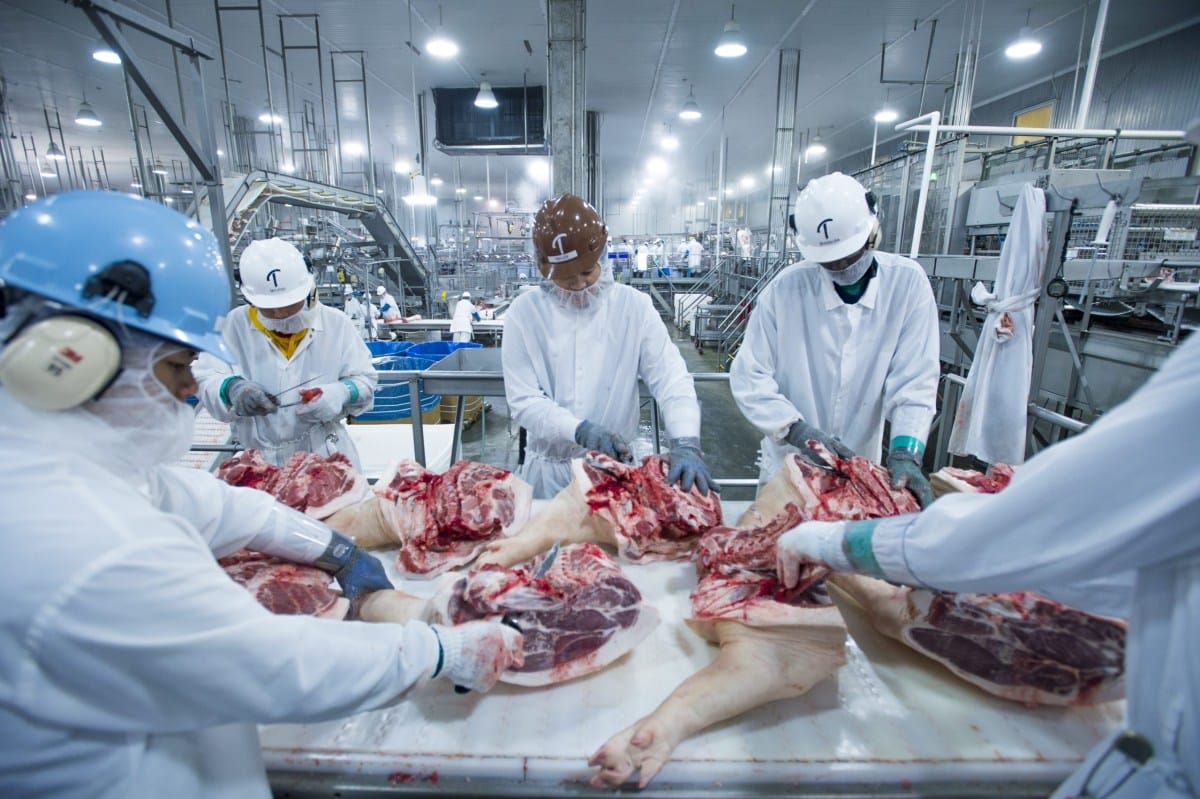
Critics warn of a riskier meat processing system
Consumer safety inspectors at meatpacking facilities have long had a challenging job. Trained by the U.S. Department of Agriculture’s Food Safety and Inspection Service, these individuals have only seconds to check for signs of disease in recently slaughtered animals.
Now, the federal government is approving a “modernized” inspection system that speeds up lines and shifts some inspection duties to company employees. In March, Agriculture Secretary Brooke Rollins announced plans to make faster line speeds a federal standard.
This week, Investigate Midwest intern Melissa Dai has a story on this shift in inspections at swine and poultry plants, which could permanently change the level of oversight FSIS inspectors have on the lines.
Dai spoke with former inspectors to better understand their duties and why some believe the changes could bring new risks to food safety, worker health and animal welfare.
However, some industry leaders who support the change believe it will improve efficiency and could increase safety.
“What FSIS did is they just switched their focus to what they should have always done, which is food safety, and put the quality oversight back into our operations,” said Juanfra DeVillena, senior vice president of quality assurance and food safety at Wayne-Sanderson Farms, the nation’s third-largest poultry producer.
Dai’s story shines a light on an important USDA policy decision, while also giving readers a better look at how the meat they eat is processed.
— Ben Felder, editor in chief
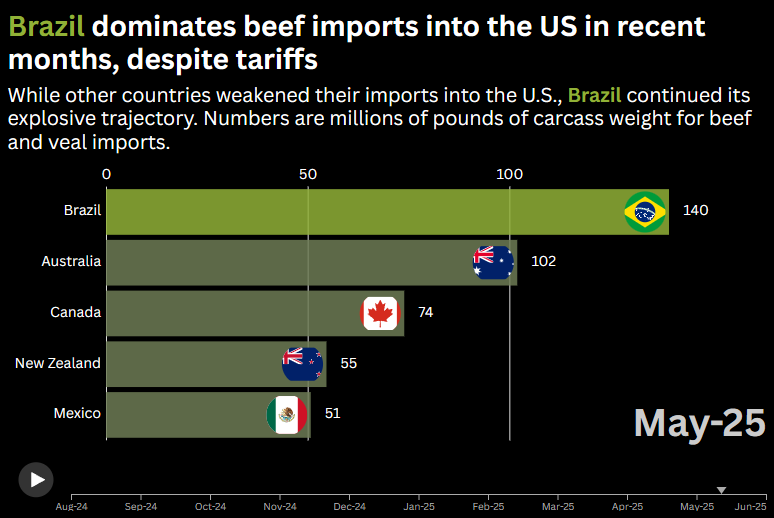
DATA HARVEST: Brazil surges in US beef imports, powered by JBS influence and declining domestic herd
By John McCracken, Investigate Midwest
Brazil has soared ahead in beef imports into the United States this year, while other countries scaled back amidst ongoing federal trade and tariff negotiations.
Brazil has become a major importer of beef and veal products into the United States since 2020, benefiting from a declining U.S. herd and its increased political influence from the country’s largest beef processor.
In January, Brazil shipped a record 197 million pounds of beef to the United States — the highest single-month total from any country in over three decades, since the USDA began tracking imports.
The country increased the pounds imported into the U.S. 26 times over, from 7 million pounds in January 2020.
OPINION: FDA’s proposed Standard of Ingredient elimination list is appropriate — so far
By Dave Dickey, Columnist
Benzoic acid is a white, odorless and tasteless preservative that became popupar around 1900 for many U.S. ketchup producers. By 1910, sodium benzoate (benzoic acid’s salt) was an ingredient in $60 million worth of food products produced in the U.S.
But as usage of sodium benzoate increased, a debate was raging over whether it was safe for human consumption. In 1901, the National Association of State Dairy and Food Departments debated the use of benzoates in packaged food, especially ketchup.
The agency reached a general consensus that one-twelfth of 1% sodium benzoate should be the standard. However, USDA chemist Harvey Wiley fiercely opposed the use of the preservative. In 1904, Wiley recruited a dozen young men to ingest increasing amounts of either sodium benzoate or benzoic acid over a month. Only three finished the trial.
Still, in 1909 USDA gave sodium benzoate a seal of approval, which was almost immediately rejected by the Buffalo Medical Journal. Hokey Pokey anyone?
That all changed in 1939, when the Food and Drug Administration created Standards of Identity for food as part of the 1938 Food, Drug, and Cosmetic Act.
Today there are roughly 250 food Standards of Identity in the U.S. covering an array of products primarily including dairy, baked goods and canned fruit and vegetables. But in July, FDA proposed revoking 52 SOI’s in one huge swoop.
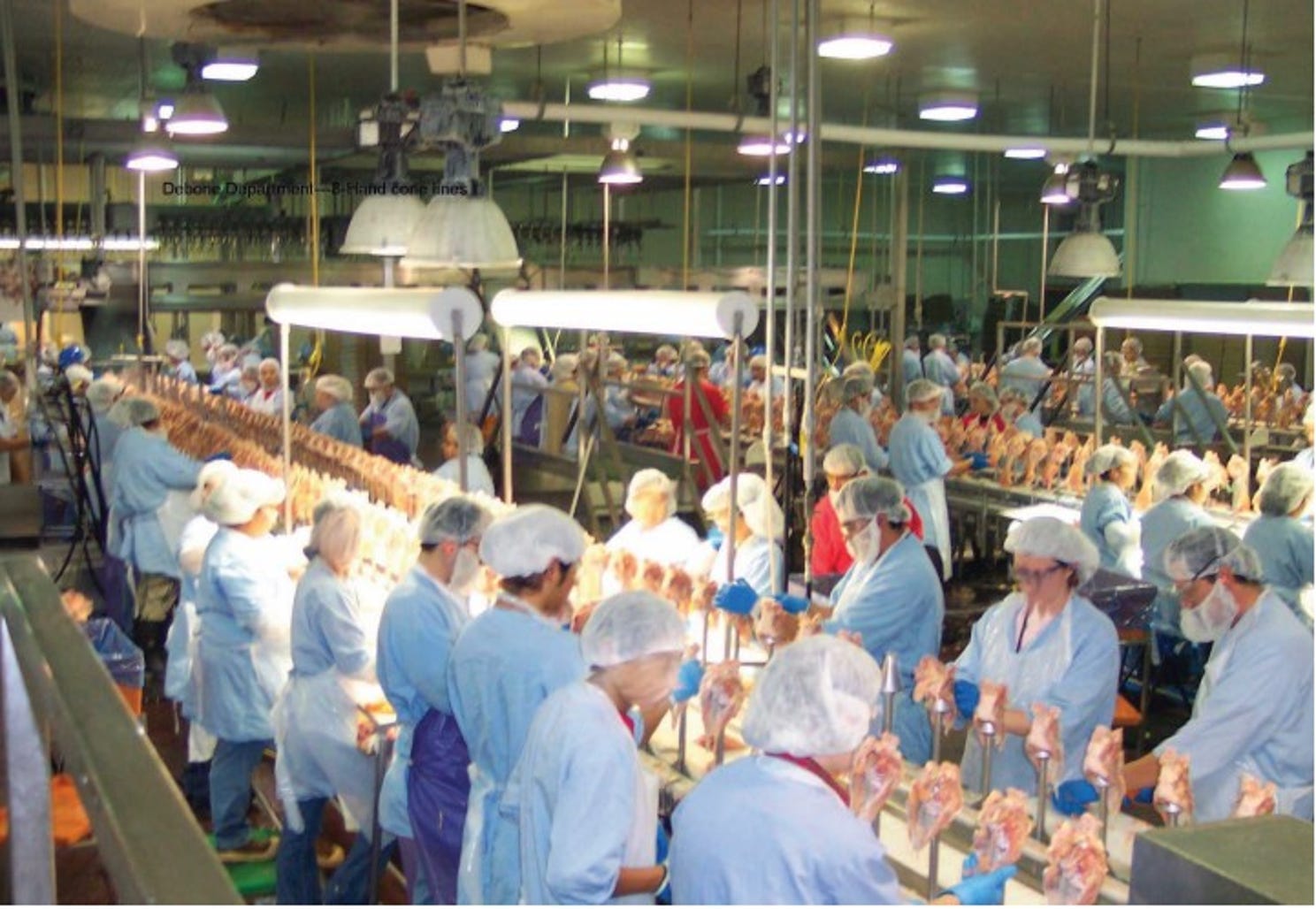
ICYMI: Meatpacking plant workers at higher risk for severe finger injuries compared to other injuries
By John McCracken, Investigate Midwest
Occupational Safety and Health Administration data from 2015 to 2023 shows more than half of severe incidents that occured in meatpacking plants injured workers’ fingers and fingertips, including amputations.
OSHA attributed this heightened risk to the lack of adequate safety features in many plants, which include failing to prevent workers' hands from coming into contact with rapidly moving machinery and blades. The agency identified this as a top safety violation.
This analysis by John McCracken from November 2024 is especially relevant now as the federal government is looking to make higher line speeds the industry standard — a change that could further impact worker safety.

Join us for Sunset on the Farm Sept. 14
On Sunday, Sept. 14, join Investigate Midwest and our IowaWatch newsroom for an evening at Walker Homestead in Iowa City. The setting is absolutely beautiful. We'll have live music, delicious wood-fired pizza and a silent auction. All proceeds support our independent, public service journalism.
News from our trusted media partners
Residents in Iowa demand action to clean up dangerously polluted water, The New Lede
Former Tyson exec now oversees the safety of the U.S. meat supply, Sentient Media
Investigate Midwest is an independent, nonprofit newsroom. Our mission is to serve the public as a watchdog over influential agricultural corporations and institutions through in-depth and data-driven investigative journalism.