July 18, 2024 The Midwest Center For Investigative Reporting
Long-term exposure can have 'devastating' health effects, experts say
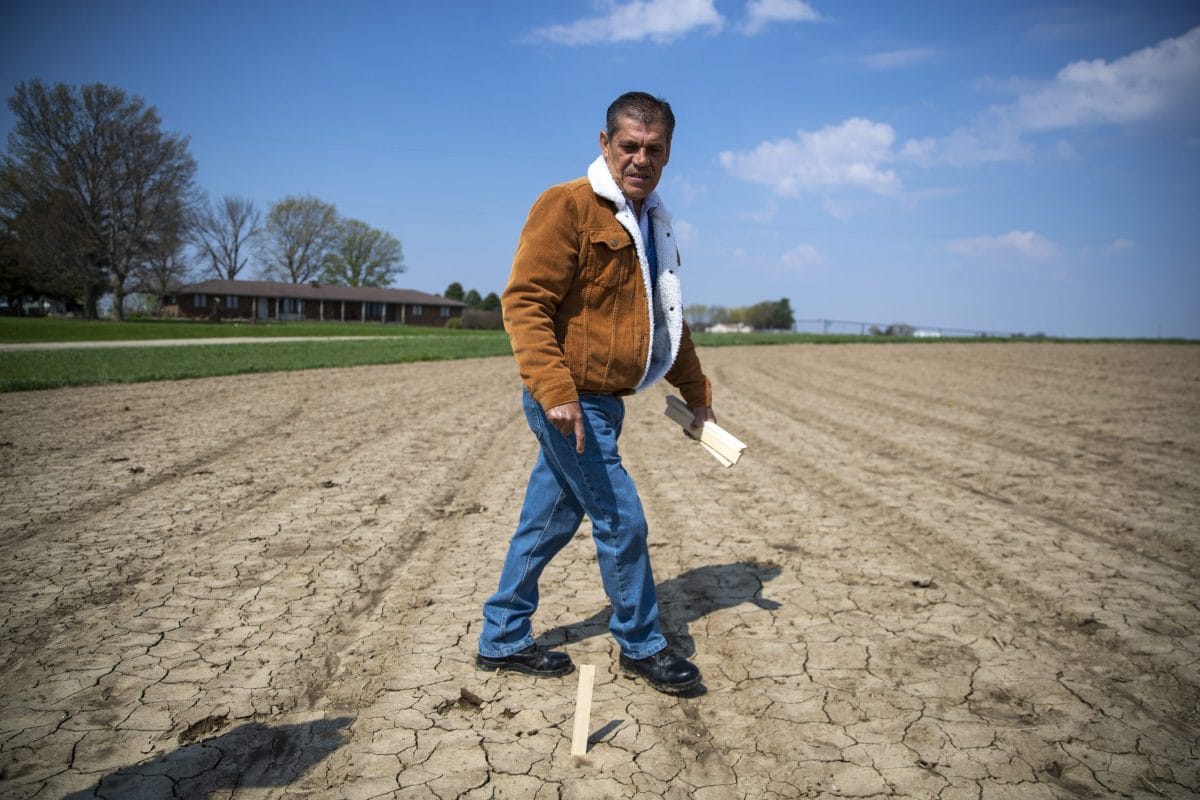
Pesticide exposure can cause health problems from skin rashes to cancer. Some of the most at-risk people are farmworkers, who spend their days walking through fields that have recently been sprayed. Still, it's difficult to know how many and what variety of pesticides farmworkers face daily.
To answer this question, Univision Noticias placed wristbands on 10 farmworkers in Florida, Michigan and North Carolina. As they labored, the wristbands detected the pesticides they encountered. In some cases, the wristbands picked up pesticides that had been banned long ago.
In a story co-published by Investigate Midwest, Univision Noticias illuminates the harmful effects long-term pesticide exposure can have on the people who ensure the country's food supply.
— Sky Chadde, assistant editor/senior reporter

Exposed: Latino farmworkers risk their health working under threat of pesticide exposure
By Patricia Clarembaux, Federica Narancio and Esther Poveda, Univision Noticias
Over two years Univision Noticias spoke to more than 30 workers to understand how pesticide exposure has impacted their daily lives.
All of these workers have been sprayed in the course of their daily work with unknown chemicals from tractors, airplanes or by those fumigating on foot. They’ve also come into contact with pesticide residue by touching fruits that had recently been sprayed.
These workers are rarely informed of the dangers they face.
Read more.
GRAPHIC: Midwest is home to less than 10% of Hispanic farmers
By Mónica Cordero, Investigate Midwest/Report for America
According to the latest Census of Agriculture, the Midwest is home to less than 10% of the country’s farmers who identify as Hispanic. This makes it the region with the second-lowest Hispanic representation among farmers, behind only the Northeast.
In the Midwestern states, where more than 10,000 farmers who identify as Hispanic live, most of them are concentrated in Missouri, Kansas, Michigan and Illinois.
View the graphic.
ICYMI: What you need to know about Nebraska Gov. Jim Pillen and his family business
By Sky Chadde, Investigate Midwest
Starting in the early 1990s, Jim Pillen, famous for his college football days, grew his hog business into one of the largest pork empires in America. From a base in eastern Nebraska, he expanded into other states and even internationally. Then, he was elected Nebraska’s governor.
For more than a year, Investigate Midwest and the Flatwater Free Press have reported on Gov. Jim Pillen and the pork empire he created, Pillen Family Farms.
Read more here.
OPINION: Is EPA ignoring the Supreme Court decision in Sackett?
By Dave Dickey, Columnist
The U.S. Supreme Court finding in Sackett v. Environmental Protection Agency fundamentally changed how protected wetlands are defined under Waters of the United States in the Clean Waters Act.
The court replaced the controversial and heavily debated nexus test in favor of what should be a straightforward analysis to determine if a wetland falls under the law: “In sum, we hold that the (Clean Water Act) extends to only those ‘wetlands with a continuous surface connection to bodies that are “waters of the United States” in their own right,’ so that they are ‘indistinguishable’ from those waters.”
There doesn’t appear to be a whole lot of room for debate.
That is, of course, unless you are the EPA.
Read more.
News from our partners
Upper Mississippi River flooding offers relief after ongoing drought in the south. By Delaney Dryfoos, The Lens and Phillip Powell, the Arkansas Times
Investigate Midwest is an independent, nonprofit newsroom. Our mission is to serve the public as a watchdog over influential corporations and institutions through in-depth and data-driven investigative journalism.