Jan. 9, 2025 The Midwest Center For Investigative Reporting
As the agriculture drone industry takes flight, feds struggle to keep up
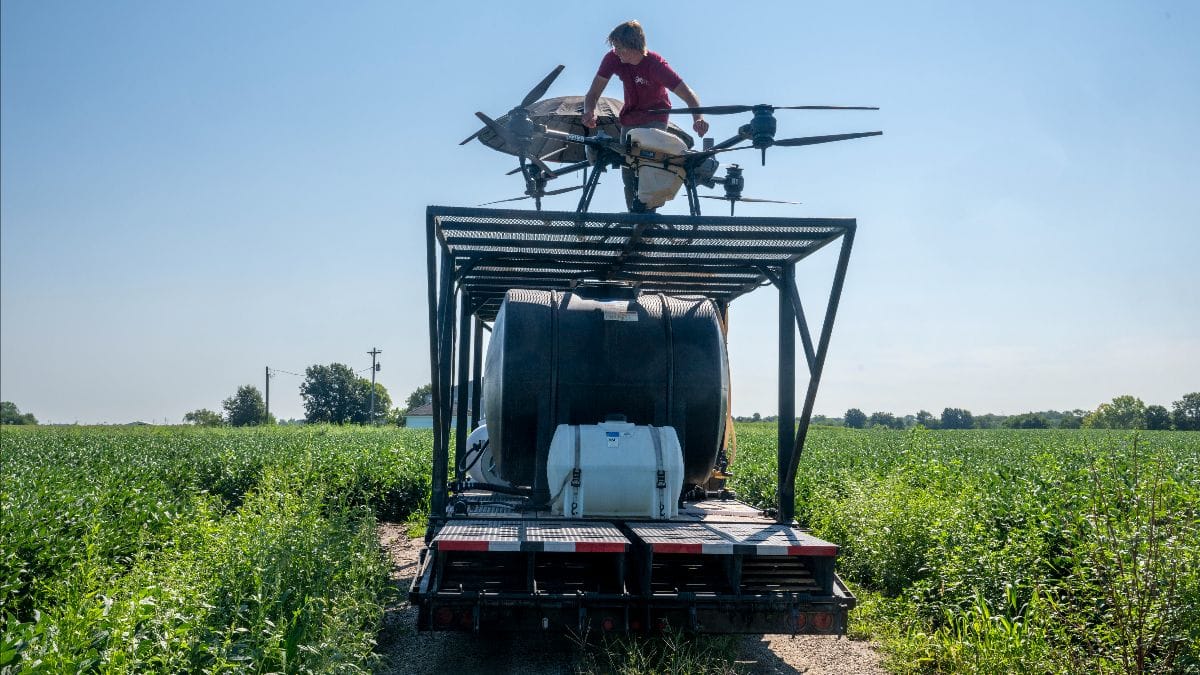
Drones are becoming more widely used in the agriculture industry, especially as a method for spraying crop fields with chemicals.
In 2024, nearly 1,000 drone pilots were authorized by the Federal Aviation Administration to operate agricultural drones, with more than 80% gaining approval in just the last year.
This week’s feature story investigates the growth of the agricultural drone industry and how the FAA and lawmakers might be struggling to keep up.
Some farmers say drones are more efficient in spraying chemicals, especially compared to traditional crop-dusting airplanes. However, political fears over Chinese technology being used to spy have posed a risk to future expansion. Some federal lawmakers have proposed a ban on all Chinese-made drones, which account for nearly 70% of the nation’s agricultural drones.
“There has been no factual evidence suggesting that data collected by agricultural drones is being provided to the Chinese government,” said Bryan Sanders, a member of the American Spray Drone Coalition, a new association that is lobbying for agricultural drone expansion.
Read more here.
— Ben Felder, editor in chief
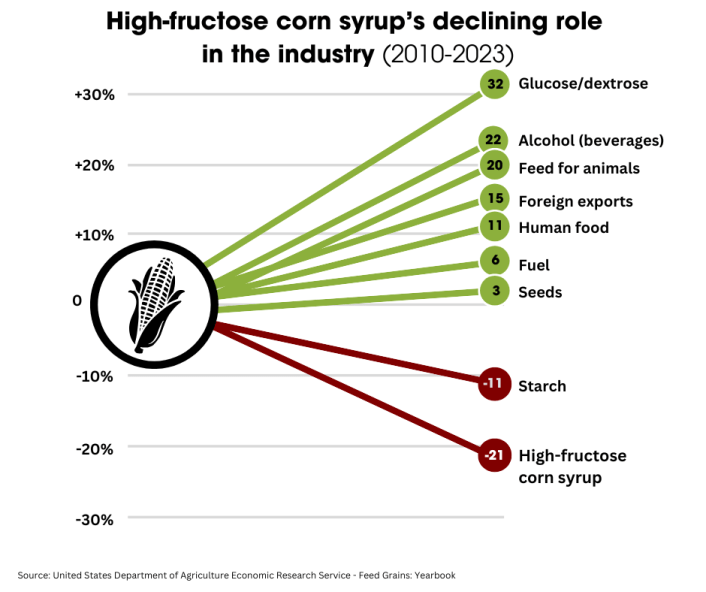
Corn, the nation’s largest crop, is produced for a variety of uses, including food for humans and animals, alcohol for fuel and exports to foreign countries. Almost all of those uses have increased over the last several years.
However, corn produced for high-fructose corn syrup has decreased by 21% over the past decade, dropping from 521 million bushels in 2010 to 410 million bushels last year.
High-fructose corn syrup is used in a variety of processed foods, including ketchup, soda and candy. It’s an important business for companies like Archer Daniels Midland, which operates the world’s largest corn syrup processing plant in Illinois.
Robert F. Kennedy Jr., President-elect Donald Trump’s nominee for Secretary of Health and Human Services, has long decried corn syrup as a “poison” leading to America’s high obesity rates. Kennedy wants to push companies away from high-fructose corn syrup.
ICYMI: Fertilizer from human waste faces scrutiny but remains a profitable industry
By Ben Felder, Investigate Midwest
Our deep dive into the billion-dollar biosolid fertilizer industry remains one of readers' most revisited stories. With mounting concerns over "forever chemicals" and their impact on air, water, and food safety, this investigation sheds light on a controversial practice shaping agriculture and policy nationwide. If you missed it — or want to revisit the critical findings — read it now.
OPINION: It's hard to see a silver lining ahead for 2025
By Dave Dickey, Columnist
Seeing how we all managed to survive another trip around the sun, it's time again for this columnist to predict which agricultural stories will make news in 2025. I've grabbed some of my most reliable aids, including a handful of bone oracles made out of cattle shoulder blades, my grandmother's tea cup, a scrying ball, and five free range chicken and a bag of seeds (just keeping it ag) to guarantee crystal clear clairvoyance. Here we go.
Read more.
Investigate Midwest is now on Bluesky!
Follow us at @investigatemidwest.bsky.social.
Investigate Midwest is an independent, nonprofit newsroom. Our mission is to serve the public as a watchdog over influential agricultural corporations and institutions through in-depth and data-driven investigative journalism.