Aug. 28, 2024 The Midwest Center For Investigative Reporting
A closer look at America’s 50 state agriculture commissioners
Inspecting food processing plants, fighting wildfires and verifying grocery store prices are just some of the duties of state agriculture agencies and the agriculture commissioners that run them. These state officials have a lot of power, yet receive very little attention.
This week’s story takes a closer look at the role and influence of America’s 50 state agriculture commissioners, specifically their increasing power and the lack of diversity among them.
Some have embraced political partisanship in an effort to appeal to voters. Others have focused on mainstream farming issues, such as protecting access to farmland and promoting new crop opportunities.
Many of these officials have a background in farming. Some worked for agriculture lobbying and advocacy groups.
Together, these 50 officials hold significant power at a time when industrialization, immigration and climate change are bringing generational shifts and new challenges to the agriculture industry.
— Ben Felder, editor in chief
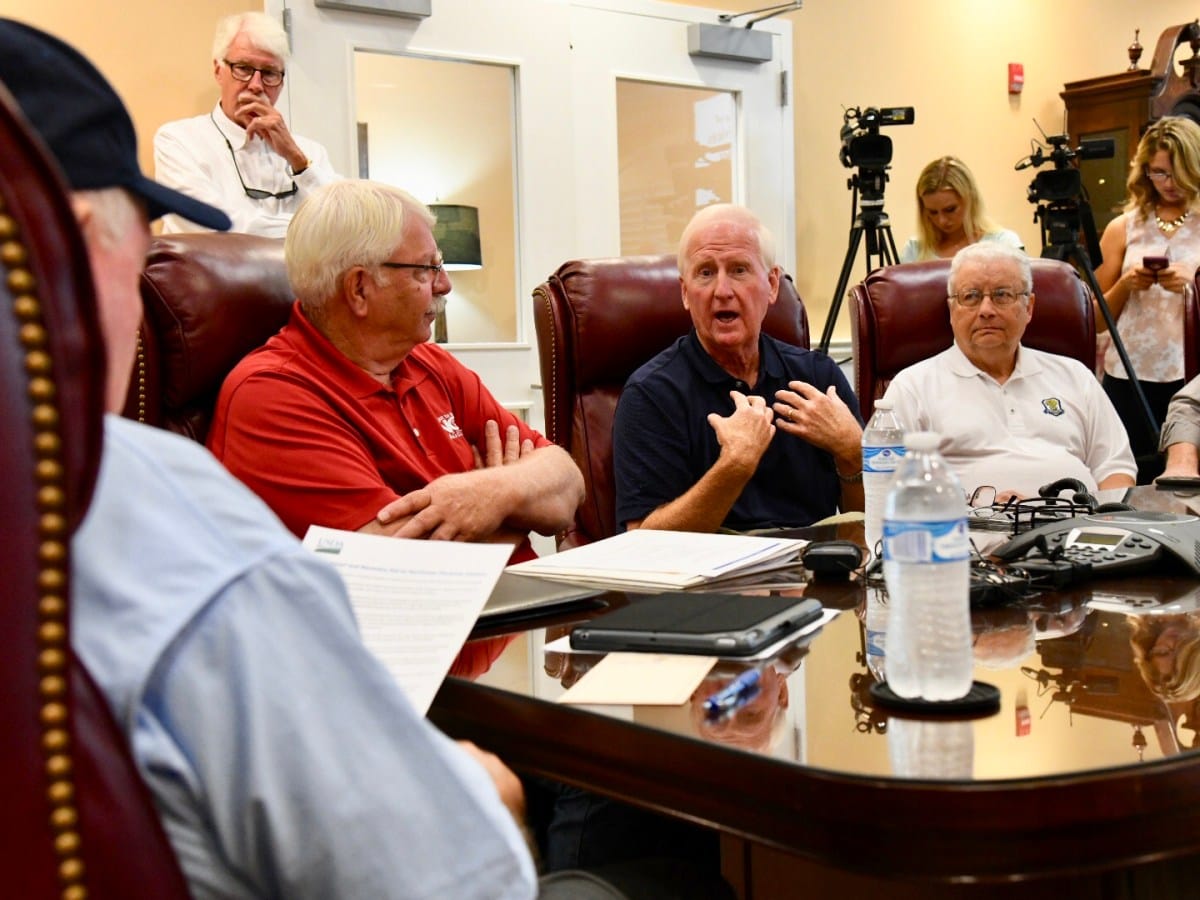
Often overlooked, these state officials wield sizable power over farming policy
By Ben Felder, Investigate Midwest
Because of the power these sometimes overlooked officials wield, Investigate Midwest wanted to better understand who these people are, how well they reflect the constituents they serve and how they are shaping America’s farming future.
The analysis found:
- Agriculture commissioners are, on average, white, Republican and male, at higher rates than other state elected officials.
- Twelve commissioners are elected, but the rest are appointed, most often by the governor, which gives state governors significant control over farming policy.
- Ten of the 12 states that elect commissioners are located in the southeastern United States, which observers say gives that region's agriculture sector a more politically partisan tone.
- Many states have expanded the powers of their agriculture agencies and recent U.S. Supreme Court rulings have also shifted more regulatory control to state agriculture leaders.
“The work is so broad with regards to fuel production, with regards to clothing (production), food safety, natural disaster response, forest management,” said RJ Karney, senior director of public policy for the National Association of State Departments of Agriculture. “It’s not just about rural communities and their farms.”
Read more.
GRAPHIC: Large farms lead in energy development payments
By Sky Chadde, Investigate Midwest
One way farmland owners can make money is by leasing their property for energy production, either from oil, natural gas, wind, or solar. Oil and natural gas produced more payments than wind and solar, according to research by the U.S. Department of Agriculture.
While only a relative handful of U.S. farms benefit from energy production, the payments can bolster farm income. About 3.5% of all farms have leased land for energy development, and the average annual payment in 2020 was $30,000, according to the USDA. (2020 was the latest year data was available.)
Search the graphic.
ICYMI: In Midwest state-level 2022 midterms, Big Ag favors Republicans, incumbents and governors, data shows
By Mónica Cordero, Investigate Midwest/Report for America and Sky Chadde, Investigate Midwest
Note: Occasionally we will reshare a previous investigation from our archives. This story originally published in 2022.
Iowa is one of the most productive agricultural states in the country. It makes sense then that Gov. Kim Reynolds would be a major recipient of industry campaign cash.
But political donations to Reynolds’ campaign in this year’s midterms also highlight a trend: Leading agricultural corporations and the industry in general tend to throw their support behind Republicans, incumbents and those in higher state offices in the Midwest, according to an Investigate Midwest analysis of OpenSecrets data.
While candidates dismissed concerns about the donations’ potential for influence, experts and advocates said political giving can help make friends in high places.
Of the more than a combined million dollars donated, the vast majority of giving by these companies and farm bureaus — more than 80% — went to Republican candidates.
Read more here.
OPINION: When ‘boneless’ isn’t quite so, is anyone at fault?
By Dave Dickey, Columnist
Eight years ago, Michael Berkheimer dropped by one of his favorite hangouts, Wings on Brookwood in Hamilton, Ohio, because he had a yen for boneless wings with parmesan garlic sauce.
Berkheimer had eaten the boneless chicken wings many times before at the restaurant. But this time was different.
Berkheimer felt like his wing went down the wrong way. He went to the washroom but couldn't clear his throat. That was the end of the meal. Over the next several days he didn't eat much.
Three days later, he went to the emergency room with a high fever where Berkheimer learned that the “boneless” chicken wings he ate, in fact, contained at least one bone that lodged in his esophagus. Doctors removed the needle-like 5-centimeter chicken bone and sent Berkhimer on his way.
Berkheimer sued the owner of the restaurant REKM, the packer Wayne Farms LLC, and food distributor Gordon Food Service. The lawsuit argued if chicken wings are branded as “boneless” there should be an expectation that the wings are, in fact, without bones. Sounds reasonable right?
Read more.
Eat, drink and enjoy Sunset on the Farm on Sept. 22
By Investigate Midwest Staff
If you haven't yet secured your tickets to our annual Sunset on the Farm event, set for Sept. 22, now is the time.
“Sunset on the Farm is always a lovely event – rain or shine – and we’re happy to host it again at the Walker Homestead, which is a beautiful setting,” said Erin Orr, Investigate Midwest’s executive director.
It is an evening to enjoy local food and wine, music, and early fall scenery at Investigate Midwest’s annual fundraiser to support its IowaWatch newsroom.
Sunset on the Farm will run 5 to 8 p.m. at Walker Homestead just outside of Iowa City. Tickets are $25 for kids over 5 and $50 for adults, which includes unlimited wood-fired pizza, salad and a make-your-own s’mores kit. Buy tickets here.
There will also be a cash bar, silent auction and live music from the Mission Bluegrass Band.
In attendance will be the IowaWatch newsroom staff, including data journalist Mónica Cordero, a Report for America corps member in Des Moines, and Mary Ungs-Sogaard, donor relations manager of Dyersville. Orr, who lives in Northwest Indiana, also will be on hand.
Read more here.
News from our partners
As climate threats to agriculture mount, could the Mississippi River delta be the next California? By Tennessee Lookout, Mississippi Free Press and Arkansas Times
Investigate Midwest is an independent, nonprofit newsroom. Our mission is to serve the public as a watchdog over influential corporations and institutions through in-depth and data-driven investigative journalism.