April 27, 2023 www.investigatemidwest.org Midwest Center for Investigative Reporting
We get to share how technology is changing the dairy industry while teaching a student
For dairy producers, milking is at the center of their livelihood. Automated milking systems are the latest innovation in this agricultural industry. This automation comes with a price tag but also helps with saving in labor and time and less stressed cows.
One of the best parts of my job is getting to work as an adjunct professor and then bringing young journalists’ works to you. This spring, soon-to-be Simpson College graduate, Ethan Humble, took a deep dive into the automation happening on some of these farms.
In business, bots like ChatGPT are changing the world. In dairy, automated milking is changing dairy farms and how they operate, one researcher said.
— Suzanne Behnke, digital editor
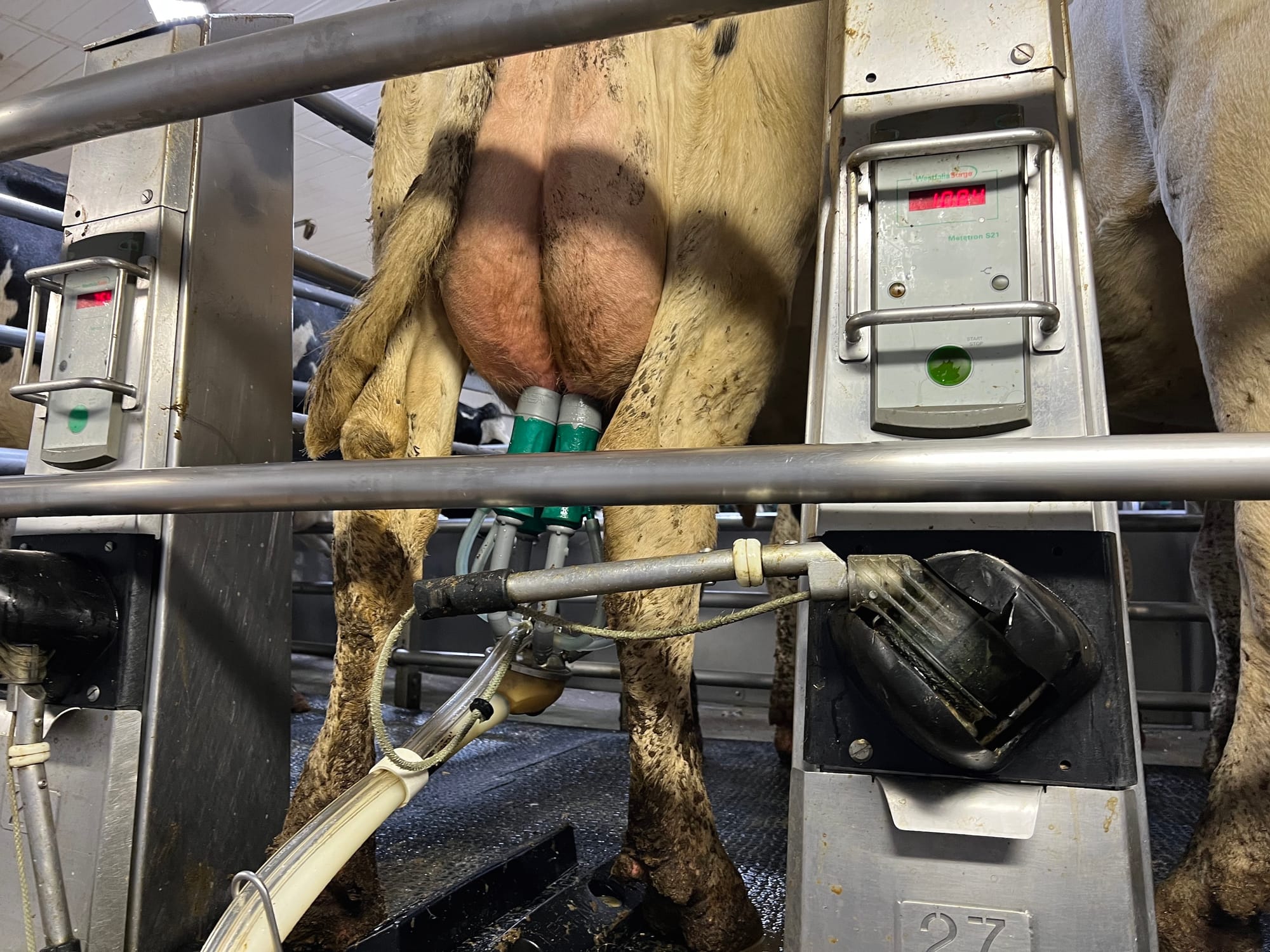
For years, farmers milked cows by hand. Now high-tech robots and technology do the work.
By Ethan Humble, for Investigate Midwest
In an increasingly automated world, the dairy industry is keeping up. According to Michigan State University, robotic milkers were first introduced in the United States in 2000. Now, according to Hoard’s Dairyman magazine, over 35,000 robotic milking units can be found around the world.
“It’s always changing. It’s like your iPhone getting changed every six months. There’s lots of technology that’s getting researched every day,” said Dana Allen, a fourth-generation dairy farmer from Eyota, Minnesota.
Dairy farm technology has transformed the industry. Read more.
RELATED STORY: Technology goes beyond milking
Graphic: Dairy cows produce millions of pounds of milk in a day
By Suzanne Behnke, Investigate Midwest
When you walk through the grocery store dairy aisle, you might wonder how much dairy cows work to produce those dozens of full gallons on the store shelves.
The latest numbers, from February 2021 through February 2023, record 631.25 million pounds of milk were produced in February 2023 on a single day.
See the graphic.
Opinion: Infant deaths due to formula contamination could have been avoided
By Dave Dickey, Columnist
Dave Dickey writes in his latest column: "Anyone with infants can tell you about the February 2022 closure of an Abbott Laboratories baby formula plant in Michigan due to contamination. The closure was a major factor in a nationwide baby formula shortage that forced parents to source food from doctor’s offices, food banks and friends and neighbors."
"Shortly before Abbott closed the Sturgis, Michigan, plant the Food and Drug Administration opened an investigation. What the FDA found was appalling – bacterial contamination including cronobacter sakazakii, which can be deadly to infants; lax safety protocols; and a leaky roof. And stunningly, a history of cronobacter dating back to the fall of 2019 — a history FDA knew nothing about."
Read more.
Our work gets attention, even from John Oliver
This year, we became part of The Trust Project, just as spring began to bloom, which seems fitting. At Investigate Midwest, we are growing our partnerships and collaborations, our coverage, and our impact.
As a member of The Trust Project, a global network of news organizations that use transparency standards to help readers assess the quality and credibility of journalism, it is more important than ever to strengthen our work for long-term sustainability.
And you can help by donating during our Spring Celebration Campaign-Planting Seeds for Truth, which will run through June 1.
Our mission is to serve the public as a watchdog over influential corporations and institutions through in-depth and data-driven investigative journalism. And our work gets attention. In April, a story from our rolling investigation into the state of migrant farmworker housing, which gives details of substandard housing many farmworkers must endure, was referenced on HBO’s “Last Night With John Oliver.”
Our reporters cover industry abuses, which business and governmental policies are – and aren’t – working well, and solutions being explored or put into practice. We focus on industrial agriculture and the parent companies behind it as well as its impact on people, jobs, animals, water, soil, and the foods we all put into our bodies and the very air we breathe.
Being a member of The Trust Project also means we are transparent about our own policies, standards and ethical practices we follow to produce this important work, day in and day out.
This spring, our goal is to raise $10,000 toward our long-term growth and sustainability, so we can continue to produce the high quality stories you’ve come to expect.
Would you please make a tax-deductible donation today by going to our Donate page here? You can use your credit or debit card, or PayPal account. (If using your credit or debit card, you do not need to set up an account; just click the box beneath the yellow PayPal button.)
A donation in any amount is appreciated. Your support will help us through the summer and beyond.
With gratitude,
Erin Orr
Executive Director/Managing Editor
P.S. Have a friend, family member or colleague who might support Investigate Midwest’s work? Feel free to forward this to someone who also believes in supporting high-quality, investigative journalism. Thank you!
Center news
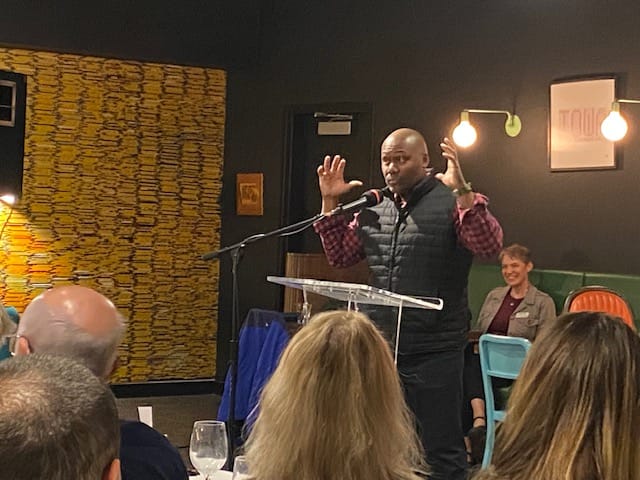
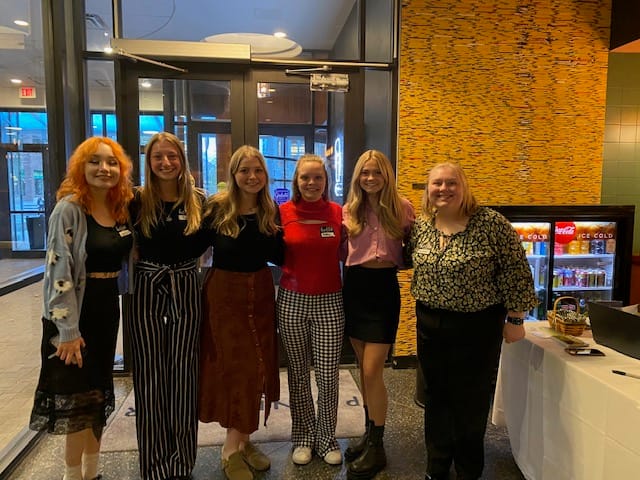
Scenes from our Spring Storytelling Event in Iowa City
Stories of being "Home Grown" blossomed the evening of April 20 in Iowa City at Poindexter Coffee at the Graduate Hotel. Thanks to all the storytellers, University of Iowa students, attendees, sponsors and more for a successful evening to celebrate the first anniversary of IowaWatch joining Investigate Midwest.