June 26, 2025 The Midwest Center For Investigative Reporting
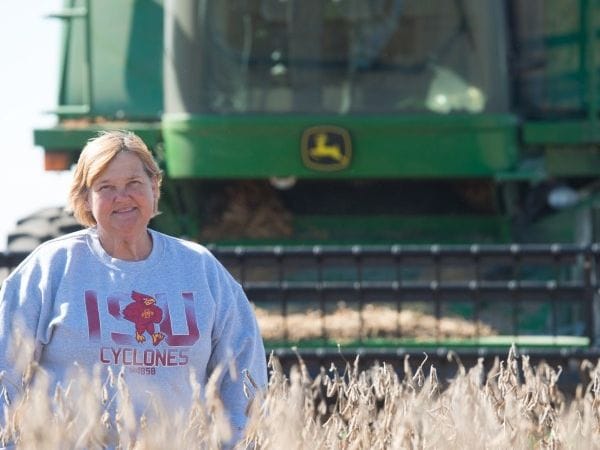
Ag squeeze tightens: Farmers face Trump’s tariffs on weaker footing
President Donald Trump has wasted little time in his second term before reigniting a global trade war. Like he had during his first term, the president imposed new tariffs on nearly all major U.S. trading partners, which increased import costs and strained agricultural trade deals.
But while American farmers navigated Trump’s first-term trade war with a financial cushion from years of strong commodity prices, this new era of trade conflict hits them on a much weaker economic footing.
The landscape for crop producers is now starkly different. Grain prices, including for soybeans — a pillar of the Midwest economy — have plummeted, with some losing over half their value.
Simultaneously, essential input costs, such as fertilizer, fuel and seeds, have surged over the past five years, squeezing already tight profit margins. This precarious position is further exacerbated by soaring interest rates on farm loans, which have increased by more than 40% since 2020.
This week’s feature story from Mónica Cordero looks at how worse economic conditions are impacting farmers during this current trade war compared to several years ago.
"I’ve never seen a time where the level of policy uncertainty is as high as it is right now," warned Patrick Westhoff, director of the Food and Agricultural Policy Research Institute.
— Ben Felder, editor in chief
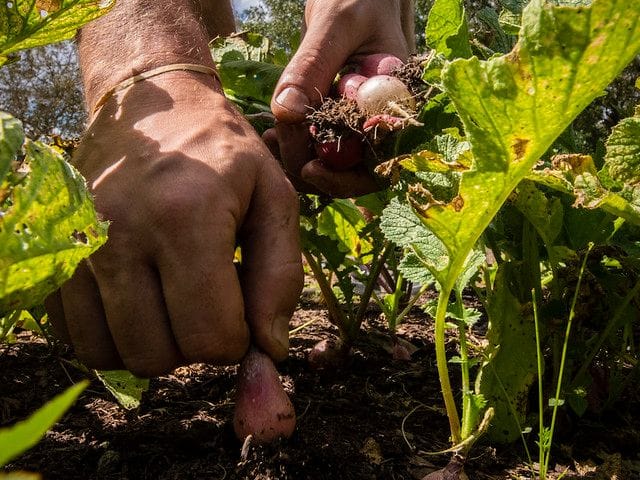
DATA HARVEST: High temps browbeat US as regulators discuss new heat protection rule for workers
By Sky Chadde, Investigate Midwest
This week, swaths of the U.S. are dealing with high temperatures and warnings of heat stroke, a potentially deadly condition. The heat wave comes just as federal regulators have convened public hearings on a Biden-era proposal aimed at preventing deaths related to heat illness among U.S. workers.
Farmworkers are among those most at-risk, according to a study by the National Institute of Health. They often wear pants and long sleeves to protect themselves from pesticides while laboring, and some employers push workers to their limits.
In July 2024, the Biden administration proposed new standards related to heat, including requiring employers to provide training, water and more breaks as the temperature increased. Public comment on the ruling ended in January. The public hearings are the next step in the process.
The future of the proposal is unclear. Some industries, such as construction, might want President Trump to approve a version of the rule in case a Democrat wins election in 2028, according to Bloomberg Law.
View the chart here.
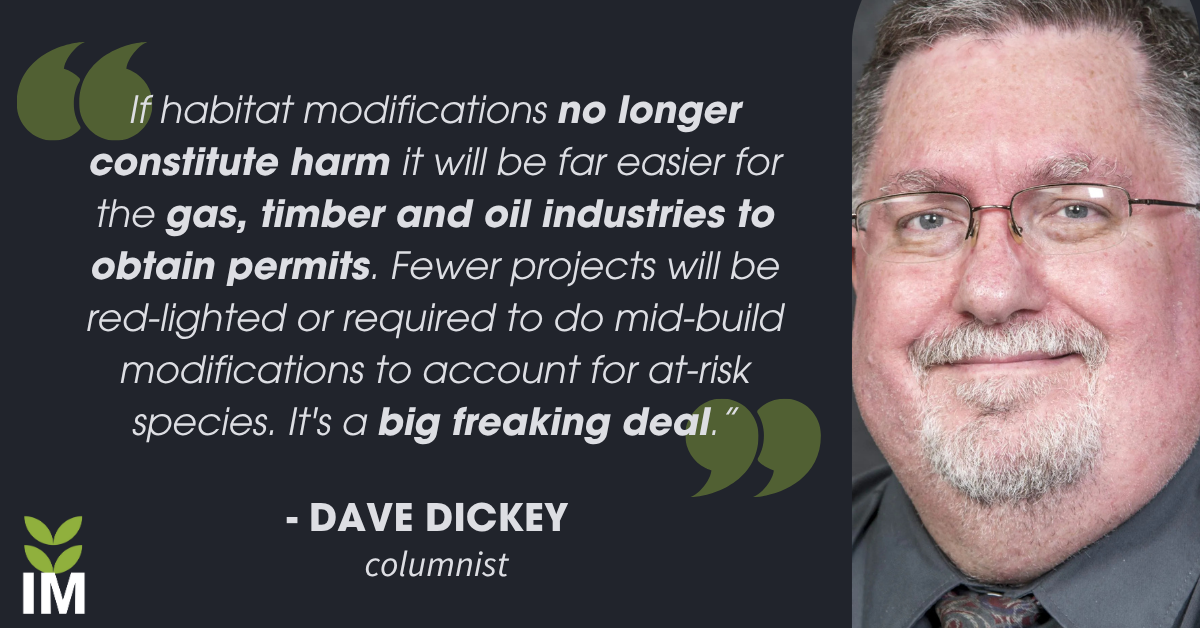
OPINION: Proposed changes to the Endangered Species Act face uncertain future
By Dave Dickey, Columnist
The April posting in the Federal Register by the U.S. Fish and Wildlife Service and the National Oceanic and Atmospheric Administration was a bombshell. The feds are proposing to eliminate the regulatory Endangered Species Act’s definition of “harm.” Full stop.
The U.S. Code of Federal Regulations specifically defined harm “in the definition of ‘take’ ” in the ESA to mean “an act which actually kills or injures wildlife. Such act may include significant habitat modification (italics added) or degradation where it actually kills or injures wildlife by significantly impairing essential behavioral patterns, including breeding, feeding or sheltering.”
Eliminating “harm” from the ESA’s definition of “take” — excluding “significant habitat modification” — one environmental group says would be “callous and reckless.”
It’s a big freaking deal.
Read more about why here.
I’m a rising senior at Northwestern University, where I’m pursuing a career in investigative journalism while studying psychology and integrated marketing communications.
Last summer, I worked as an investigative intern at NBC Chicago, where I exposed scams and fought for consumer resolutions. I’ve published two long-form investigations with MindSite News — republished by The Appeal and Capital B News — about flawed police responses to mental health crises. I also produce feature stories for my university’s paper, The Daily Northwestern.
I bring a passion for empathetic, human-centered storytelling to my work at Investigate Midwest.
Hi, I’m Juleanna DeShetler, but most people call me Julez! I’m the audience engagement intern at Investigate Midwest. I recently graduated from Eastern Michigan University with a Bachelor of Science in Journalism and Digital Media Production degree.
In this role, I’m focused on building my digital media and communication skills by helping expand the reach of Investigate Midwest’s reporting to more people. That includes creating social media content, contributing to newsletter strategy, and other behind-the-scenes work, but most importantly, exploring how people engage with journalism online.
While topics like agriculture and rural policy are new territory for me, I’m excited to grow professionally in a nonprofit newsroom, contribute to public-interest reporting, and learn from the dedicated staff around me. I’m also interested in how digital tools can make complex investigative work more accessible and engaging.
Thanks for reading and for supporting nonprofit journalism. We appreciate every click, share, and open.
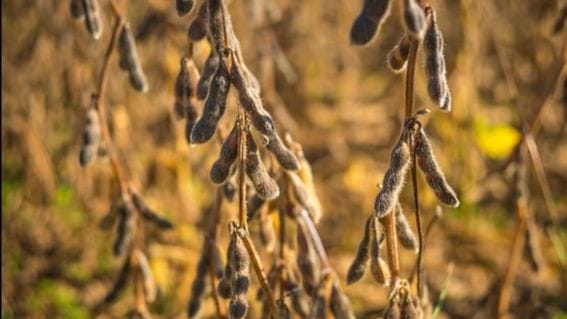
ICYMI: Farmers saw this coming.
By Mónica Cordero, Investigate Midwest
In the lead-up to the 2024 presidential election, Investigate Midwest reporter Mónica Cordero examined rising anxiety in the Midwest over the possibility of a second-term Trump trade war — and how past tariffs opened the door for Brazil and others to claim U.S. market share. Now, those worries are more than hypothetical.
Read more here.
News from our trusted media partners
Trump’s tariffs are hurting U.S. agriculture. Some farmers still support them., Mississippi Free Press
Investigate Midwest is an independent, nonprofit newsroom. Our mission is to serve the public as a watchdog over influential agricultural corporations and institutions through in-depth and data-driven investigative journalism.