Feb. 6, 2025 The Midwest Center For Investigative Reporting
Millions of livestock die in transport but cases are rarely investigated
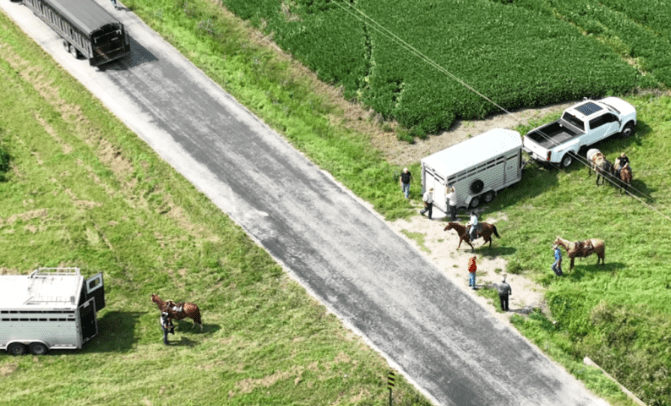
Last year, more than 20 million animals died while being transported to a slaughterhouse. Many animals were crushed, while some were killed in a truck crash.
Federal laws regulate how often livestock should receive a break during travel, but animal welfare advocates say stronger laws are needed. They also say the U.S. Department of Agriculture fails to aggressively investigate companies that violate these laws.
This week’s feature story takes a closer look at the nation’s livestock transportation laws and how few companies are investigated for breaking those laws.
Just 19 animal transportation cases were investigated by the USDA over the last 17 years. Only four resulted in a warning, according to this week’s story.
“Part of the reason why animals are treated so poorly is because it’s more economical to do it that way,” said Adrienne Craig, a senior policy associate and staff attorney at the Animal Welfare Institute, a nonprofit advocating for improved travel conditions.
This week’s story offers important insight into how meat arrives on your plate.
— Ben Felder, editor in chief
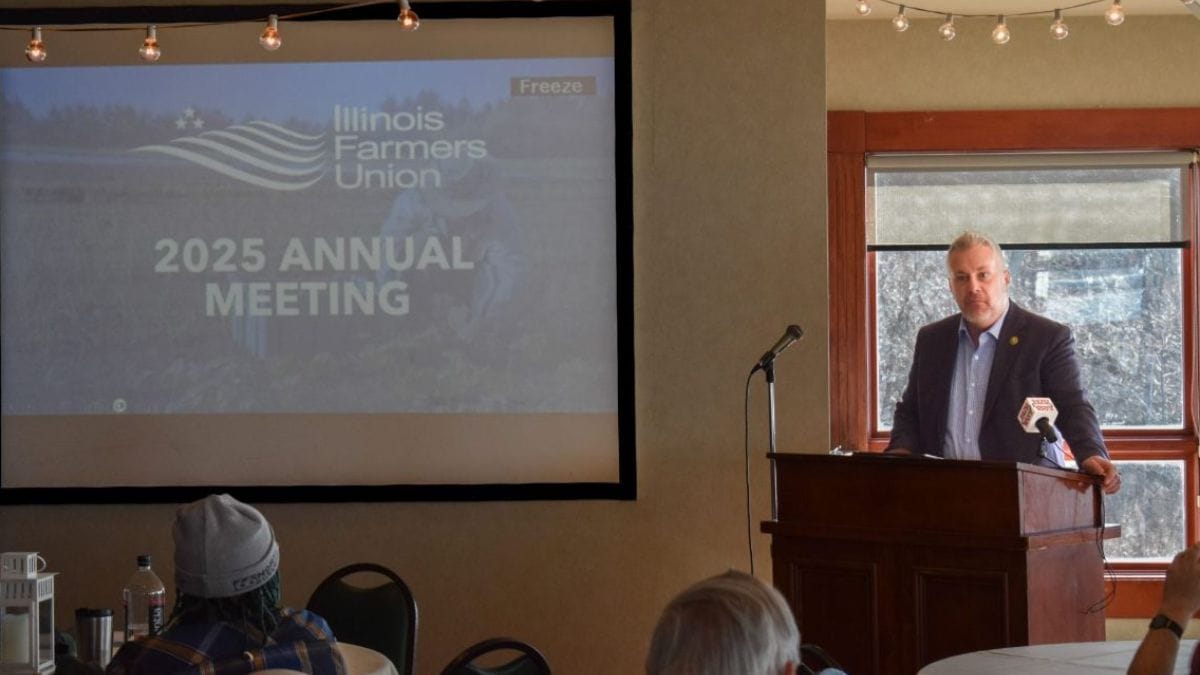
Trump’s funding freeze chills agriculture industry
By Jennifer Bamberg, Investigate Midwest
President Donald Trump’s order to freeze most federal grants and loans has created panic and uncertainty within the agriculture sector, which relies on billions of dollars in direct government assistance for loans, disaster relief and conservation practices.
Last Monday, the White House issued a memo ordering a freeze on most federal grants and loans for review to align with Trump’s agenda. A federal judge then blocked the order on Tuesday. The Trump administration later rescinded the memo but said it would continue to scrutinize federal funding.
Rob Larew, president of the National Farmers Union, said farmers and ranchers throughout the U.S. were confused by last week’s order.
“We’re getting questions from our members who have made investments on a number of fronts, everything from commercial kitchens to building out processing to even big questions about the IRA,” said Larew, referring to the Inflation Reduction Act. “We have very few answers right now and lots of questions.”
Read more.
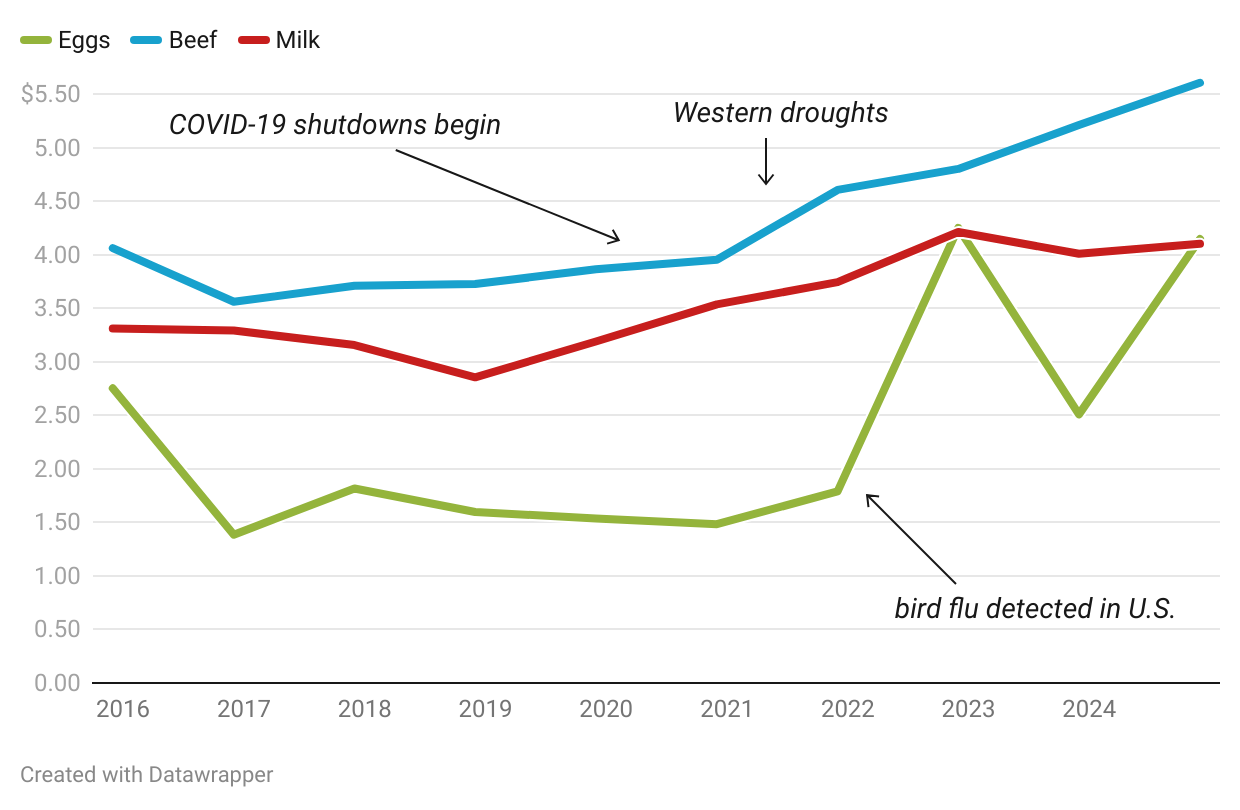
Egg prices remain volatile in the wake of the ongoing bird flu outbreaks, which have decimated commercial poultry and egg production across the U.S.
At the end of 2024, the epidemic pushed egg prices to the second-highest level – $4.15 per dozen – in the past decade, according to the Consumer Price Index. That’s second only to the first onset of the recent bird flu outbreaks.
View the graphic here.
OPINION: ‘Forever chemical’-laden sewage sludge is a national emergency
By Dave Dickey, Columnist
This is a public service announcement to any farmer who either has fertilized their crops with sewage sludge or is considering doing so this spring to save on input costs.
Stop. Don’t. To do otherwise potentially puts your farm at risk.
The Environmental Protection Agency promotes the agricultural use of biosolids, which is sewage sludge that has been treated to meet the requirements in the EPA’s regulation, “Standards for the Use or Disposal of Sewage Sludge.”
The EPA’s 2022 Biosolid Annual Report shows that 31% of all biosolids were used in agricultural applications. Another 24% were used on home gardens, landscaping, golf courses and the like.
But EPA is asleep at the switch when it comes to testing sewage sludge for the presence of polyfluoroalkyl substances — more commonly known as “forever chemicals.” It doesn’t.
Read more.
ICYMI: The changing landscape of livestock regulations
By Nina Elkadi, Sentient
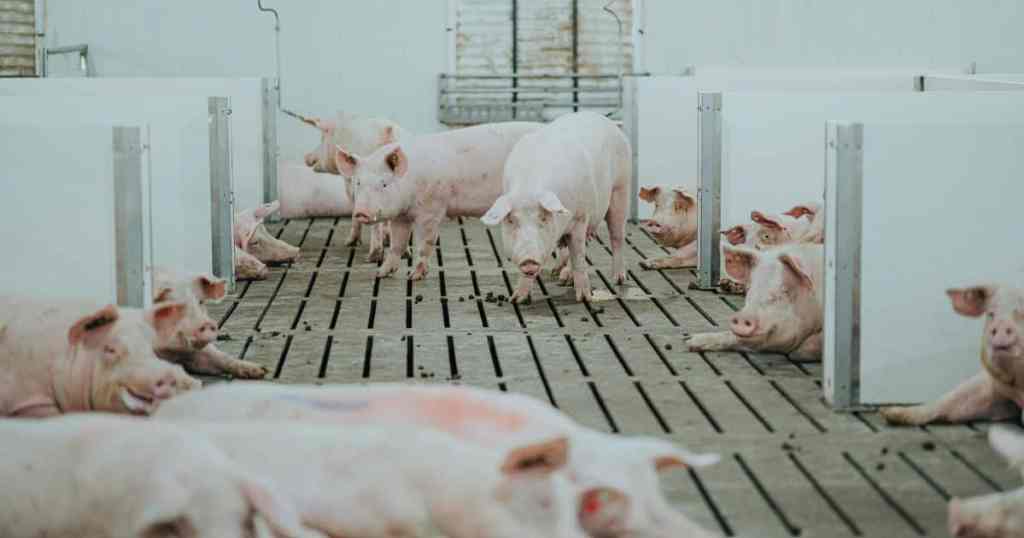
This's week ICYMI is from The Sentient. The story examines how some independent farmers are embracing Proposition 12, a California law banning gestation crates for sows, despite opposition from major industry groups. While organizations like the National Pork Producers Council argue the law harms small farmers, some producers say they have adapted successfully. A look back at this piece is timely as our top story this week looks at another aspect of animal agriculture: the transport of livestock. Each year, millions of animals die during transit, yet oversight and investigations remain limited. These stories highlight the ongoing challenges in balancing industry practices and regulations.
Read more.
Investigate Midwest has launched an audience survey to better understand what stories matters most to you.
It takes less than 5 minutes to complete, available at this link.
We look forward to hearing from you!
Investigate Midwest is now on Bluesky!
Follow us at @investigatemidwest.bsky.social.
Investigate Midwest is an independent, nonprofit newsroom. Our mission is to serve the public as a watchdog over influential agricultural corporations and institutions through in-depth and data-driven investigative journalism.