Jan. 23, 2025 The Midwest Center For Investigative Reporting
As Illinois lawmakers try to regulate carbon capture, ethanol and corn industries fight back
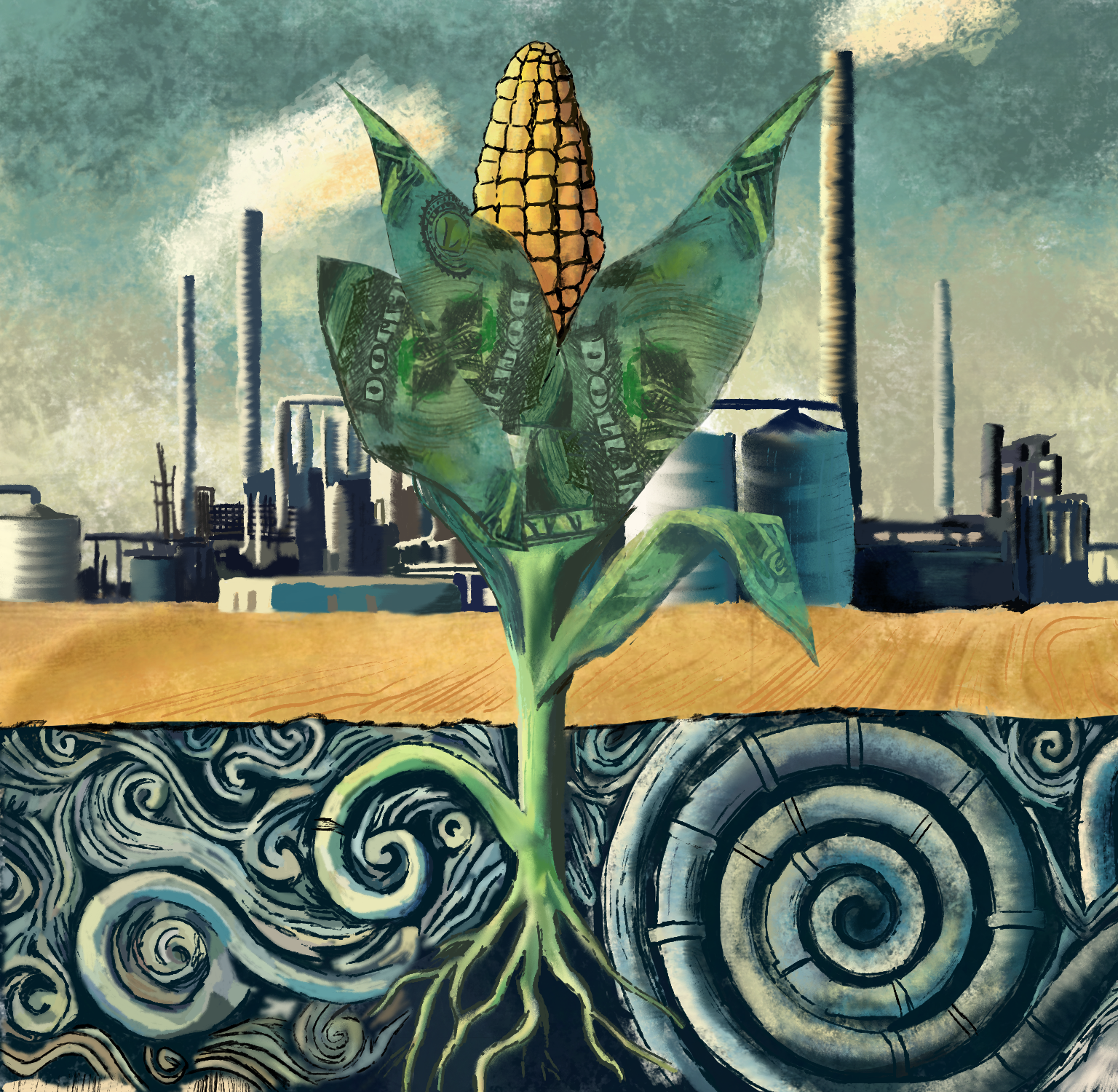
In Illinois, corn is big business. So is ethanol, which is processed from nearly a third of the state’s corn crop.
Marquis Energy, which operates the country’s largest dry-mill ethanol plant in the town of Hennepin, is hoping to expand its operations with a new carbon capture well. By turning carbon dioxide pollution into liquid and pumping it underground, the ethanol company hopes to not only prevent its pollution from warming the atmosphere, it can also receive millions of dollars in federal tax credits.
However, concern over carbon capture’s impact on groundwater and the potential for leaking pipelines prompted the Illinois General Assembly to recently approve a temporary ban on carbon capture projects and introduce a bill to ban the practice around the Mahomet Aquifer in Central Illinois.
Marquis Energy, along with the state’s corn lobby, have responded with millions of dollars in campaign contributions to state lawmakers, an Investigate Midwest analysis has found.
In this week’s feature story, state government reporter Jennifer Bamberg investigates those campaign contributions and how they might be influencing carbon capture policy at the Illinois state capitol.
Jennifer also spoke with farmers who are concerned about what a leaking carbon dioxide pipeline might mean for their health and safety.
“We will be in the immediate vicinity of the pipeline and well when farming that field, and I think that gives us, if there’s a rupture, we would have two minutes to evacuate,” said Susan Adams, who operates a corn and soybean farm about 300 feet from a proposed carbon capture injection well.
Others say any effort to stunt the growth of ethanol could have a negative impact on the state’s corn economy.
You can read Jennifer’s story here.
— Ben Felder, editor in chief
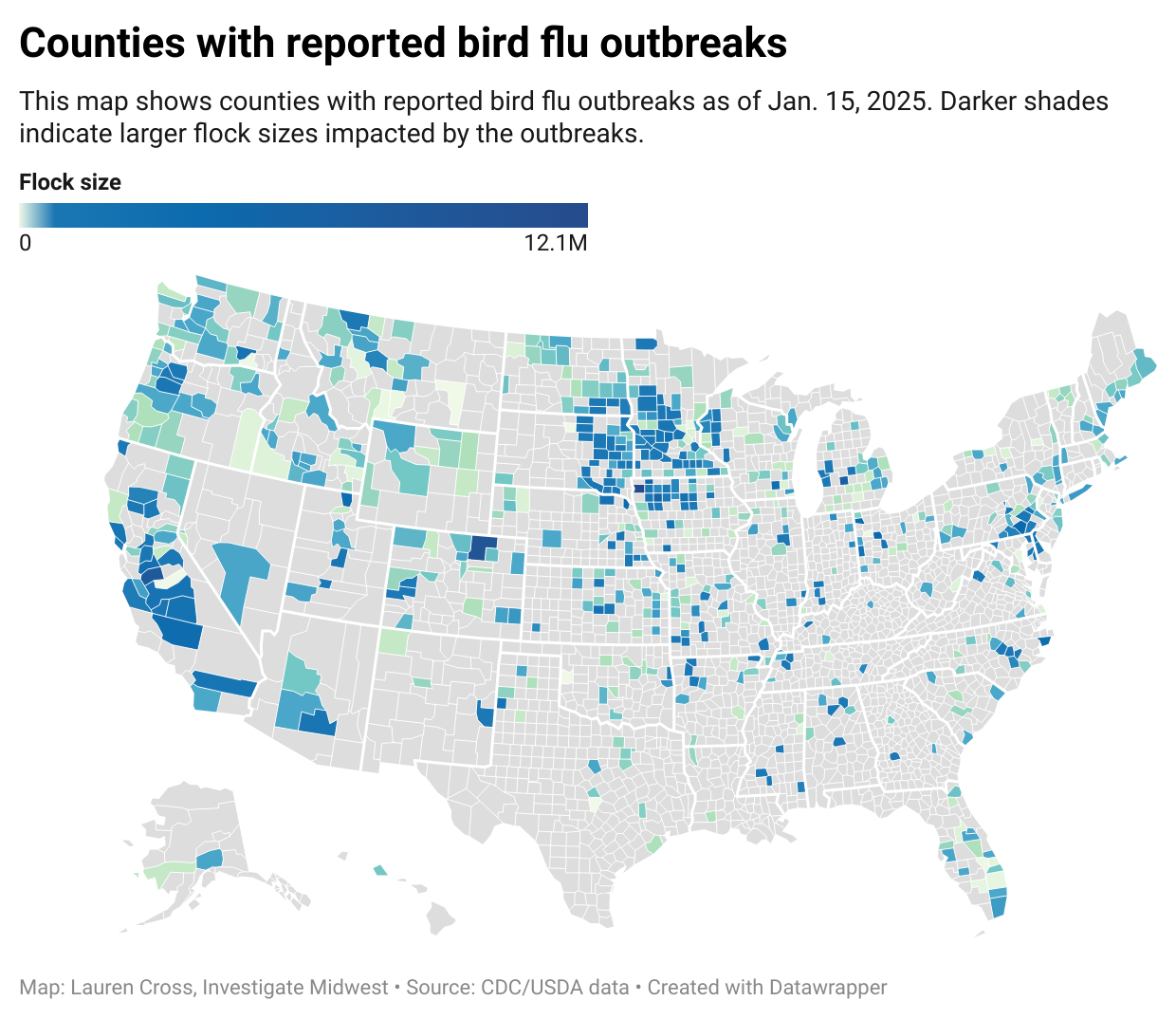
The latest data from the CDC and USDA show the continued devastating effects of bird flu outbreaks across the United States – with Iowa, the nation's leading egg producer, suffering substantial losses.
A reported outbreak Dec. 17, 2024, in Iowa's Sioux County affected more than 12.1 million poultry birds — the single largest impact recorded since federal and state government officials began tracking in February 2022, CDC and USDA data show.
A significant outbreak on Jan. 7 impacted 3.31 million birds in Hyde County, North Carolina, making it one of the most severe incidents so far in 2025.
Since early 2022, at least 1,400 outbreaks have been reported in more than 600 counties nationwide, affecting nearly 135 million birds.
View the graphics here.
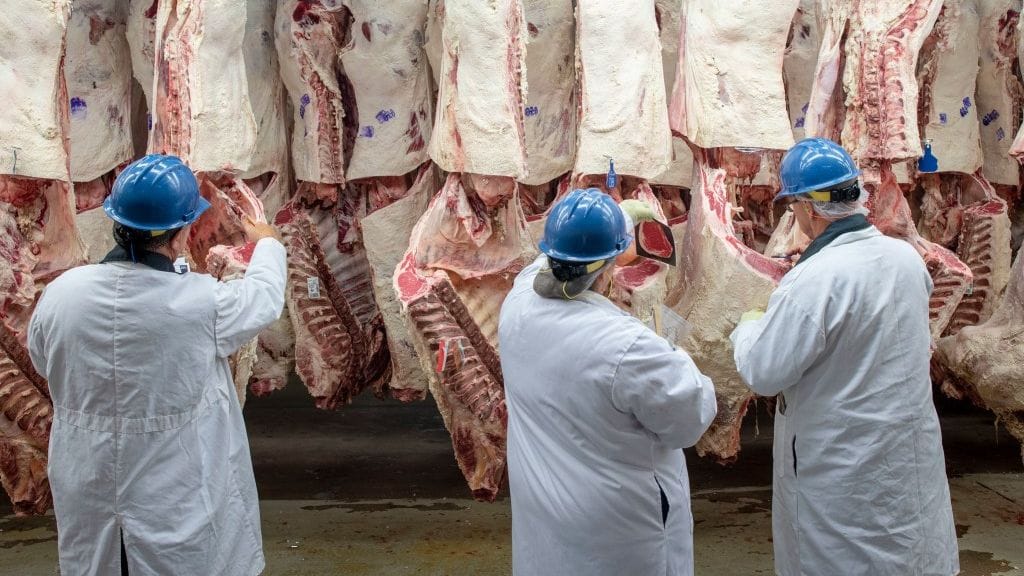
ICYMI: How meat industry lobbying is influencing regulations
By John McCracken, Investigate Midwest
Did you know the USDA’s proposed updates to the Packers and Stockyards Act have faced fierce pushback from meat industry giants? These updates aim to protect farmers from unfair practices, but lobbying efforts could hinder progress. Revisit our coverage for an in-depth look at the ongoing battle shaping the future of the meat industry.
Read more.
OPINION: Second Trump administration must take bird flu seriously
By Dave Dickey, Columnist
In the run up to the November elections, then-Republican vice presidential candidate J.D. Vance famously blamed Democrat presidential candidate Kamala Harris for spiking the price of eggs.
“Let’s talk about eggs. Eggs, when Kamala Harris took office were short of $1.50 a dozen. Now, a dozen eggs will cost you around $4, thanks to Kamala Harris’ inflationary policies.”
It’s true egg prices are through the roof. The Consumer Price Index for last November showed the price of eggs jumped 8.2% from October and spiked 37.5% year over year.
But Vance is oh so wrong on why egg prices are out of control. Inflation really has very little to do with it. The driving culprit is the spread of bird flu across the country. The Centers for Disease Control and Prevention says more that 133 million birds have been detected with the highly pathogenic viruses since January 2022. All those dead chickens directly impact the U.S. egg supply. And fewer eggs combined with higher holiday demand equals higher retail egg prices.
But when it comes to the bird flu, the Trump White House has much bigger problems than the cost of eggs. And it better be paying attention.
Read more.
More stories from our media partners:
An alternative to the USDA Organic label could be more accessible for farmers. Can it stick with consumers?, Harshawn Ratanpal, KBIA
Investigate Midwest is now on Bluesky!
Follow us at @investigatemidwest.bsky.social.
Investigate Midwest is an independent, nonprofit newsroom. Our mission is to serve the public as a watchdog over influential agricultural corporations and institutions through in-depth and data-driven investigative journalism.